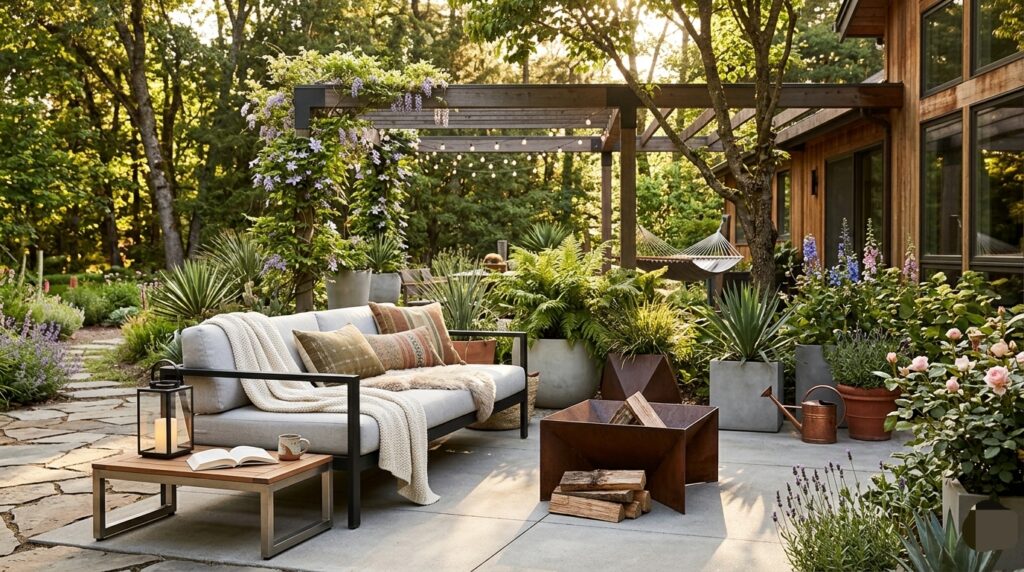
Old shovels, rakes, and watering cans have more life in them than most people think. That rust and weathered patina you see as a problem? It is actually what gives them charm. Using old garden tools as rustic outdoor decor is one of the easiest ways to add farmhouse character to your yard without spending much.
Before you toss those worn-out tools in the trash, take a look at what they can become. From flower planters to wall art, the ideas below will help you see every old tool in your shed as a decorating opportunity.
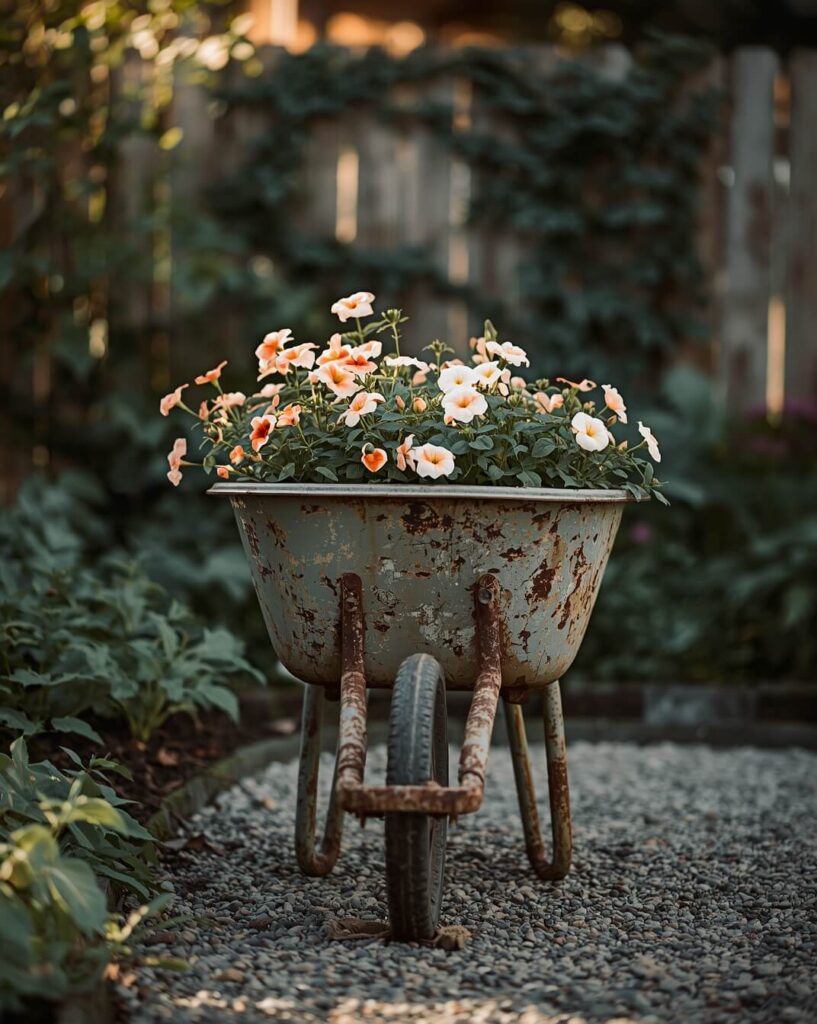
1. Turn a Wheelbarrow into a Flower Planter
An old wheelbarrow makes one of the most eye-catching rustic planters you can put in a yard. If it has cracks or rust holes in the bottom, that is actually a good thing. The built-in drainage means you can fill it with soil and start planting right away.
Load it up with trailing flowers like petunias, sweet potato vine, or marigolds for a full, overflowing look. Park it along a garden path or near the front porch where it will stop people in their tracks.
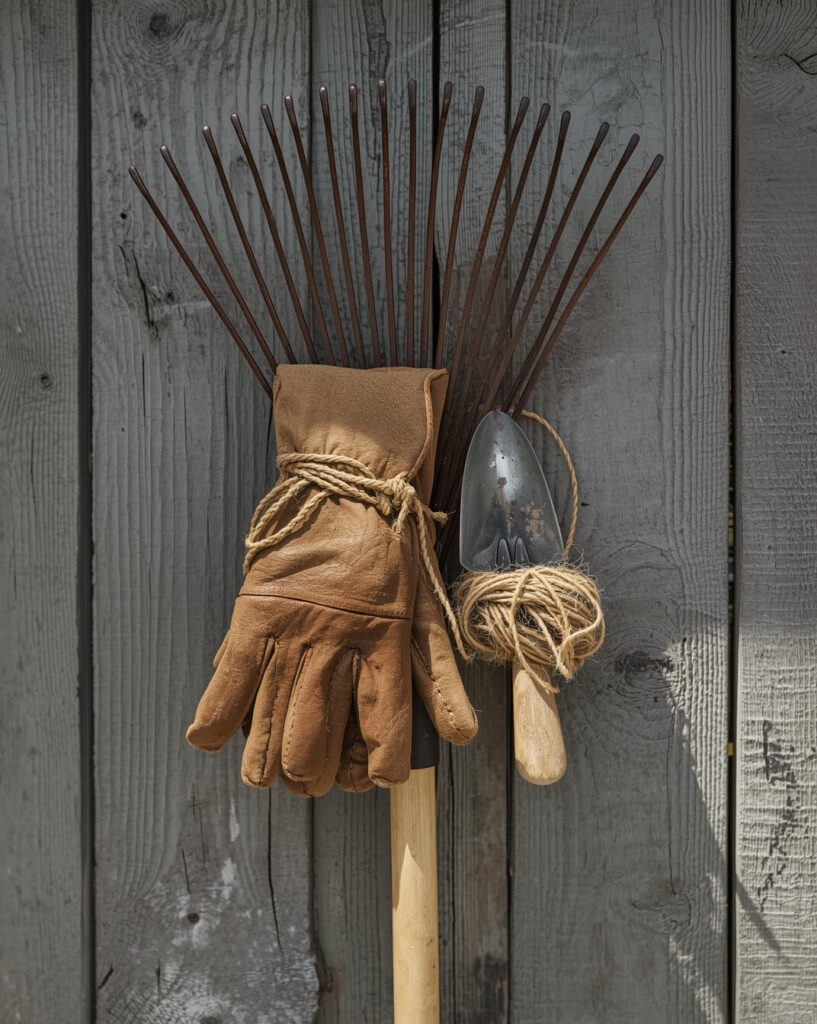
2. Mount a Rake Head as a Wall Organizer
Remove the handle from an old metal rake and mount the head flat against a fence, shed wall, or garden gate post. The tines act as ready-made hooks for hanging gloves, small hand tools, twine, or a sun hat.
Clean off any loose rust with a wire brush, then leave it as is for a natural weathered look or give it a coat of outdoor paint. It is one of the most practical pieces of upcycled garden tools yard art you can make in under an hour.
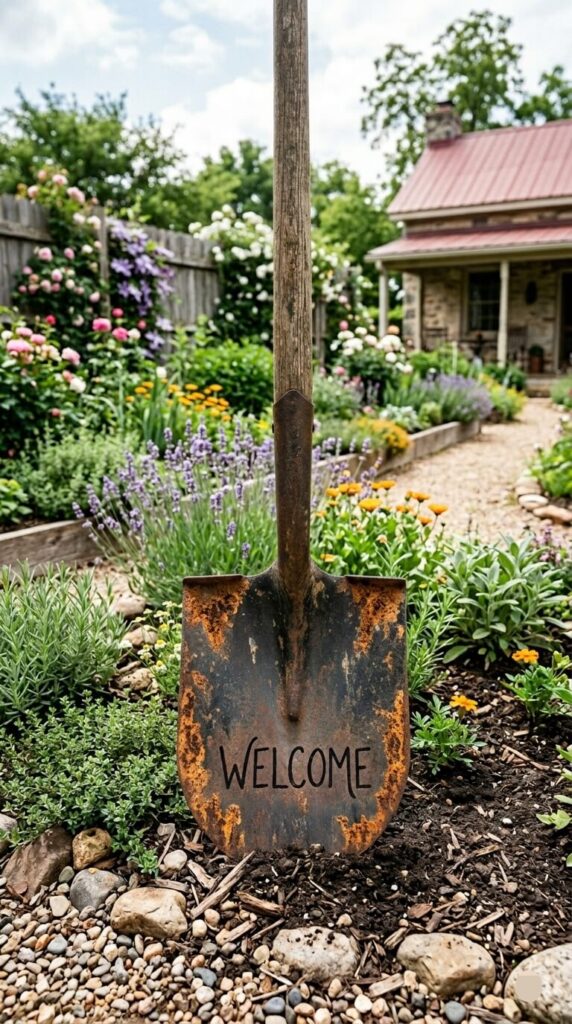
3. Use a Shovel Blade as a Garden Sign
The flat shovel head is a natural canvas for outdoor signage. Sand it lightly, then paint on a welcome message, a garden quote, or the name of a planting bed using outdoor acrylic paint.
Seal it with a clear weatherproof coat so the design holds up through rain and sun. Drive the handle into the ground near your front gate or at the entrance to a raised bed for a charming, personalized touch.
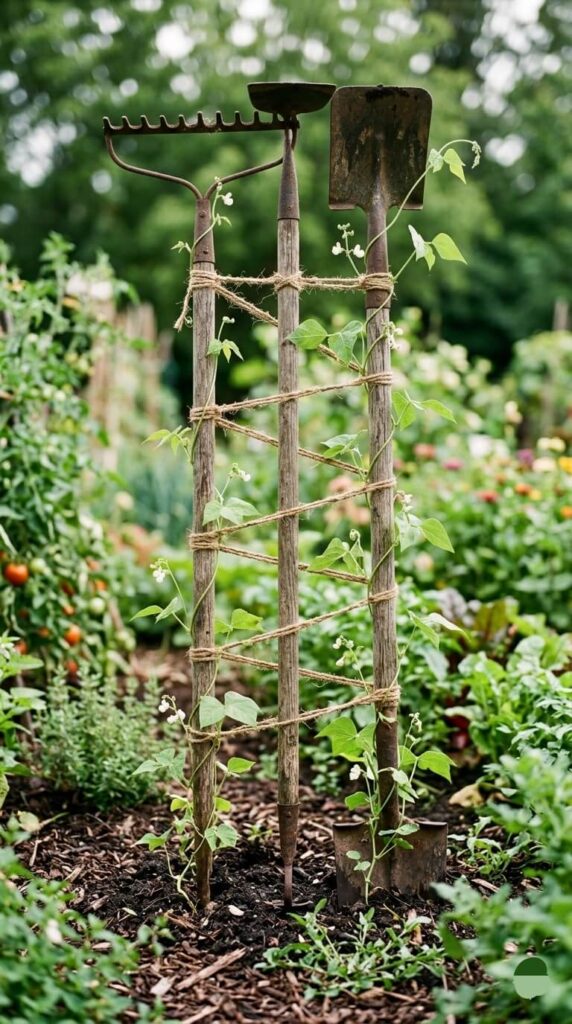
4. Build a Trellis from Long-Handled Tools
Gather two or three long-handled tools like rakes, hoes, or spades and push them vertically into the soil. Use additional shorter handles or tool shafts horizontally between them, securing the joints with jute twine or zip ties.
The result is a sturdy, rustic trellis that climbing plants like beans, clematis, or morning glory will happily grow up. It looks like garden art standing on its own, and it becomes even better once the vines fill in.
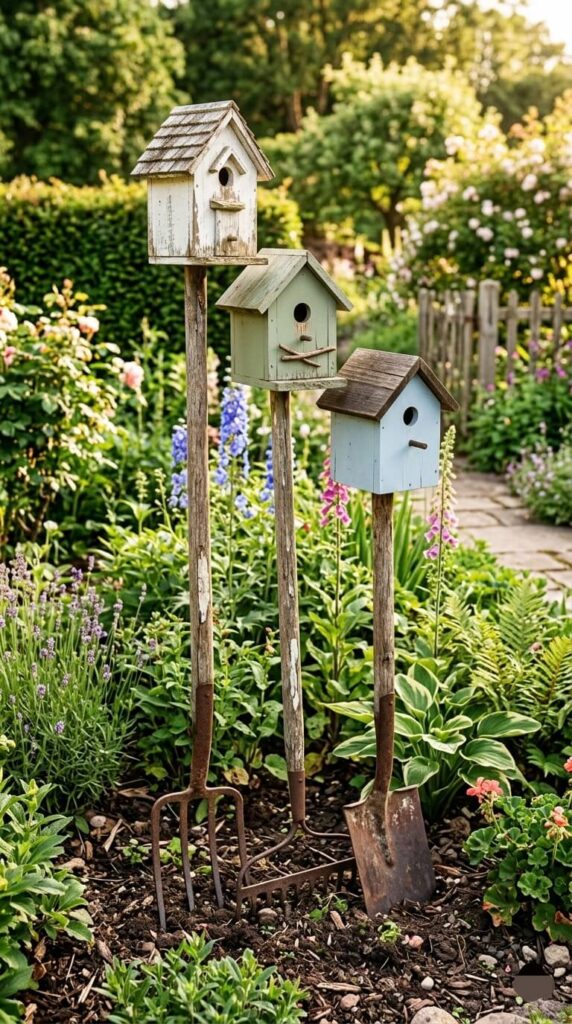
5. Make a Birdhouse on a Shovel Handle
Attach a small wooden birdhouse to the top of a shovel handle and drive the blade end into the garden soil. The shovel keeps the house at a good height for birds and gives the whole display a quirky, farmhouse-style look.
Paint the birdhouse in a soft color that complements the metal shovel blade below it. Group two or three of these together using different tool handles for a little birdhouse village effect in the yard.
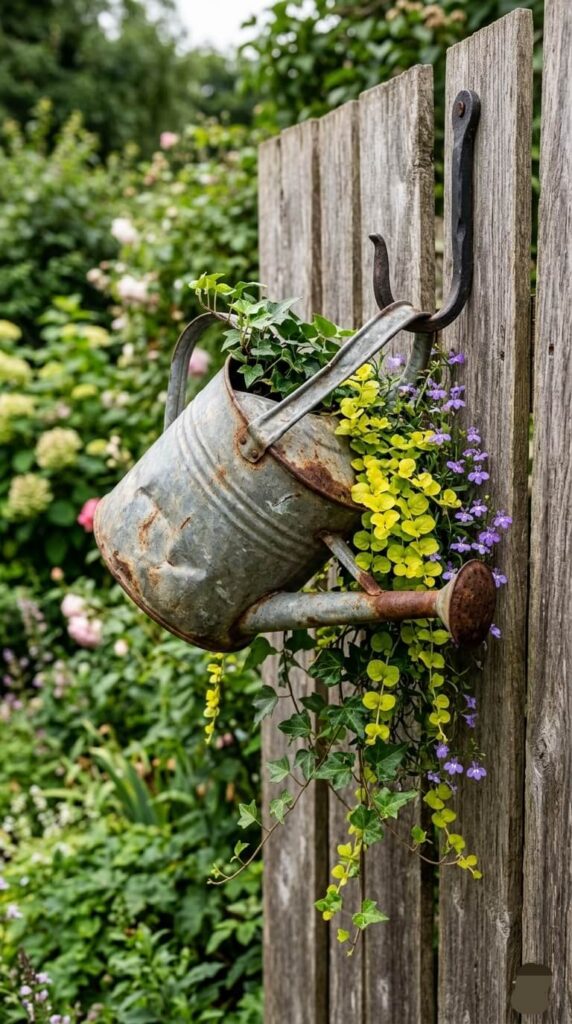
6. Hang a Watering Can as a Wall Planter
An old watering can with a hole or crack in it is perfect for this. Mount it on a garden fence or shed wall using a sturdy hook or bracket, with the spout angled slightly down.
Fill it with trailing plants like ivy, lobelia, or creeping jenny so the foliage spills out of the opening and over the sides. The sight of greenery pouring from a rusty watering can planter is one of those details that makes a yard feel truly lived-in and loved.
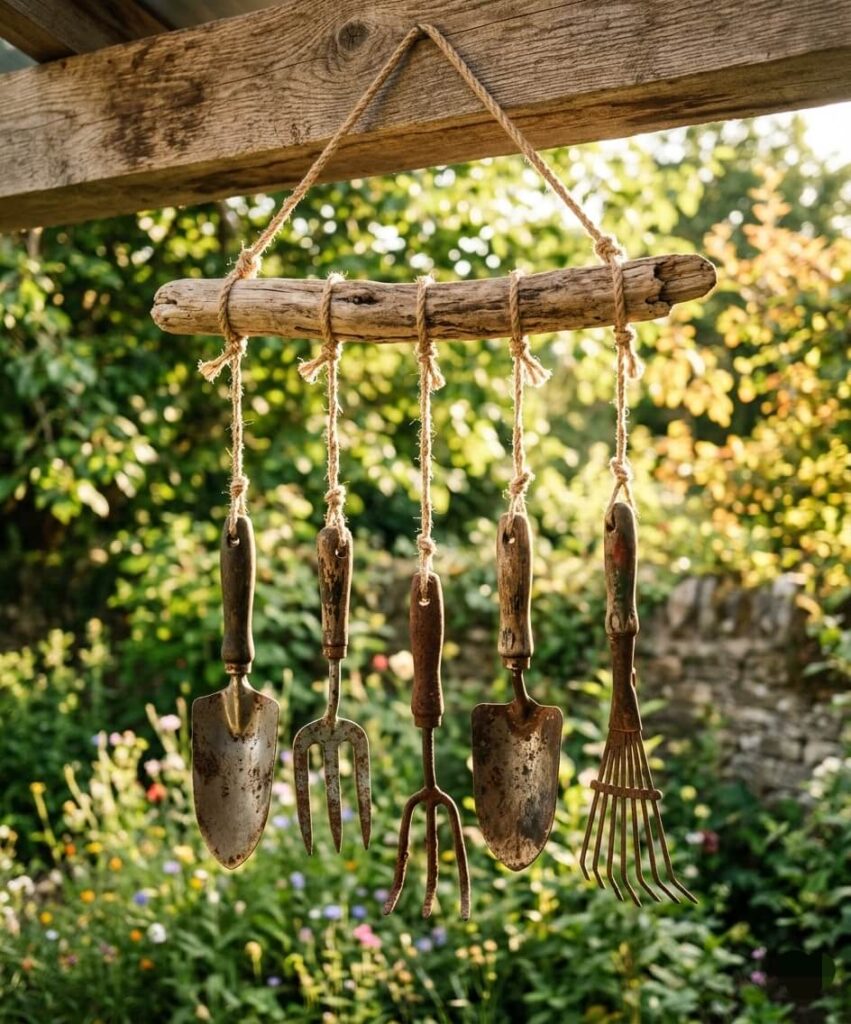
7. Create a Wind Chime from Small Tools
Gather a collection of small old tools like trowels, hand forks, and cultivators and hang them from a length of driftwood or a thick wooden dowel using jute or wire. Space them so they knock against each other gently in the breeze.
The metal-on-metal sound is soft and pleasant, and the visual effect is wonderfully rustic when the tools are left with their original patina. Hang it from a porch beam or a tree branch where it will catch the wind.
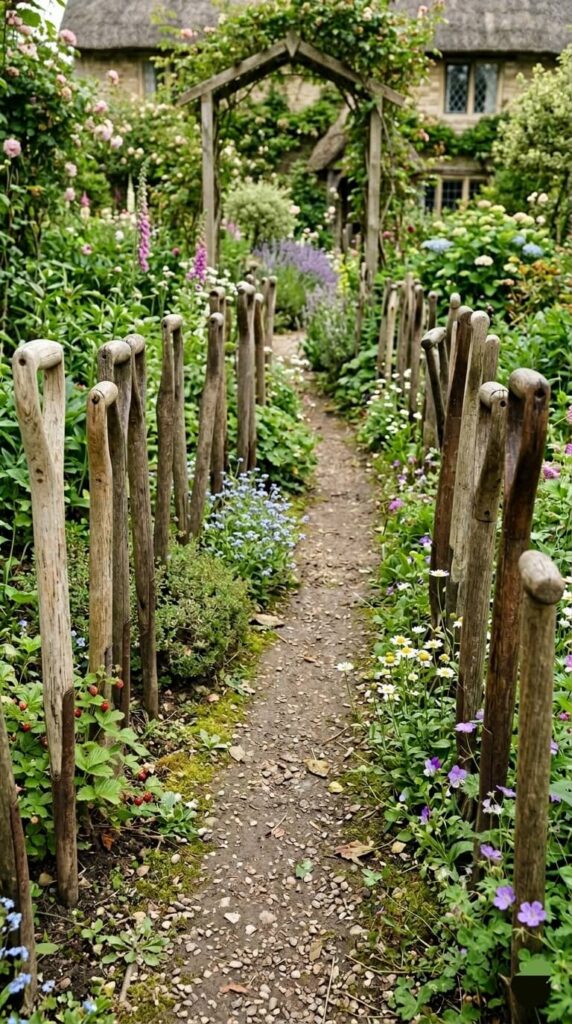
8. Line a Garden Path with Tool Handles
Broken handles that are no longer attached to a tool head do not need to go in the bin. Push them into the soil at even intervals along either side of a garden path to create a simple, rustic border.
You can leave them plain for a natural look or whitewash them with diluted paint to make them pop against the greenery. It is an understated detail that gives a garden path a lot of personality with very little effort.
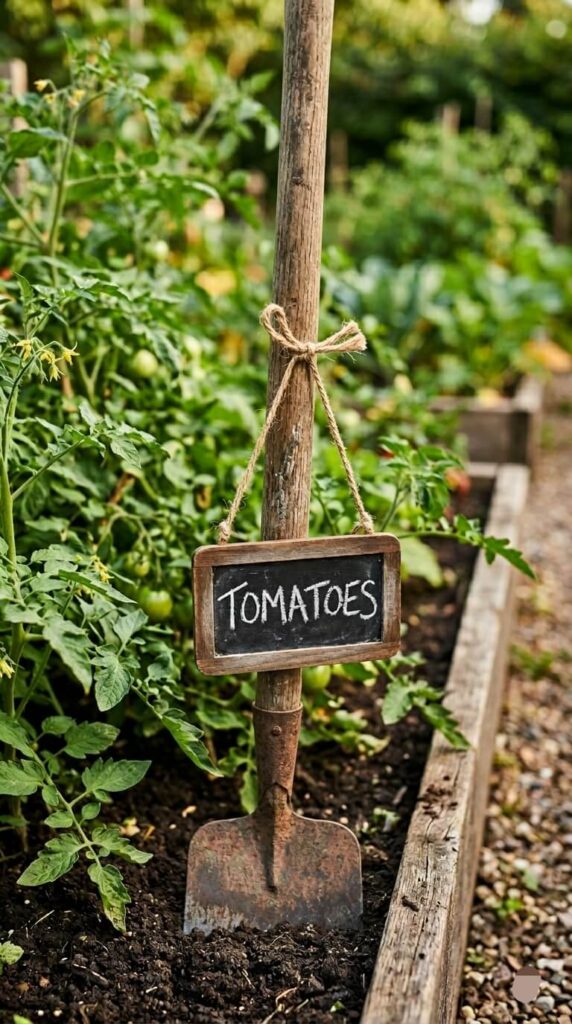
9. Use an Old Hoe as a Plant Marker Stand
Stick an old hoe into the soil at the edge of a garden bed, blade end down, so the handle stands upright. Hang a small chalkboard tag or a painted wooden label from the handle to mark what is growing in that bed.
The hoe adds height and a vertical rustic element while doing a practical job at the same time. This works especially well in vegetable gardens where you want both function and a bit of farmhouse charm.
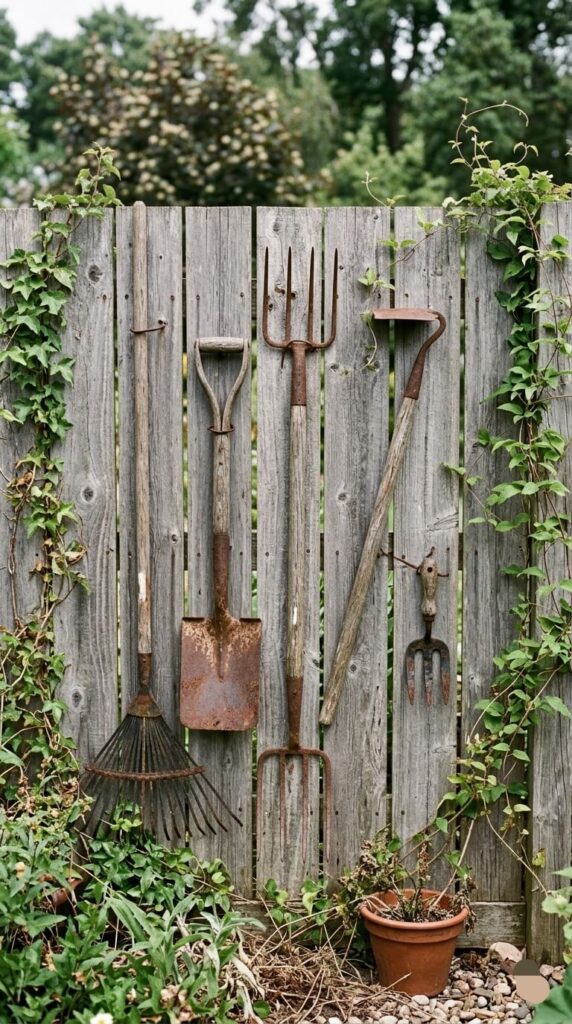
10. Display Tools as Fence Art
Arrange a collection of old garden tools directly on a wooden fence or garden wall for a display that looks like intentional outdoor artwork. Mix different sizes and shapes such as rakes, shovels, and hand forks for visual variety.
You can leave them in their natural, weathered state for a raw rustic feel, or paint each one a different muted color for a more curated look. Use hooks or wire to secure them so they stay in place through wind and rain.
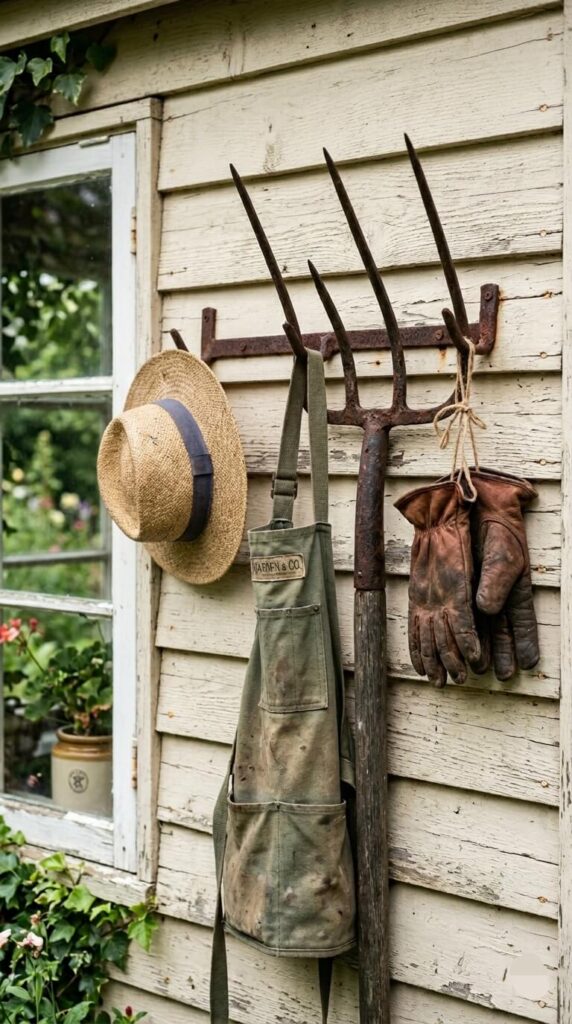
11. Turn a Pitchfork into a Garden Coat Hook
A pitchfork mounted horizontally on a shed wall or outdoor post makes a surprisingly useful and good-looking coat hook station. The tines are strong enough to hold garden aprons, sun hats, lightweight jackets, or a basket of gloves.
Mount it securely using heavy-duty screws and wall anchors, and make sure the tines face outward at a safe, comfortable angle. Left with its original rust and weathered finish, it brings an honest, hardworking character to any outdoor space.
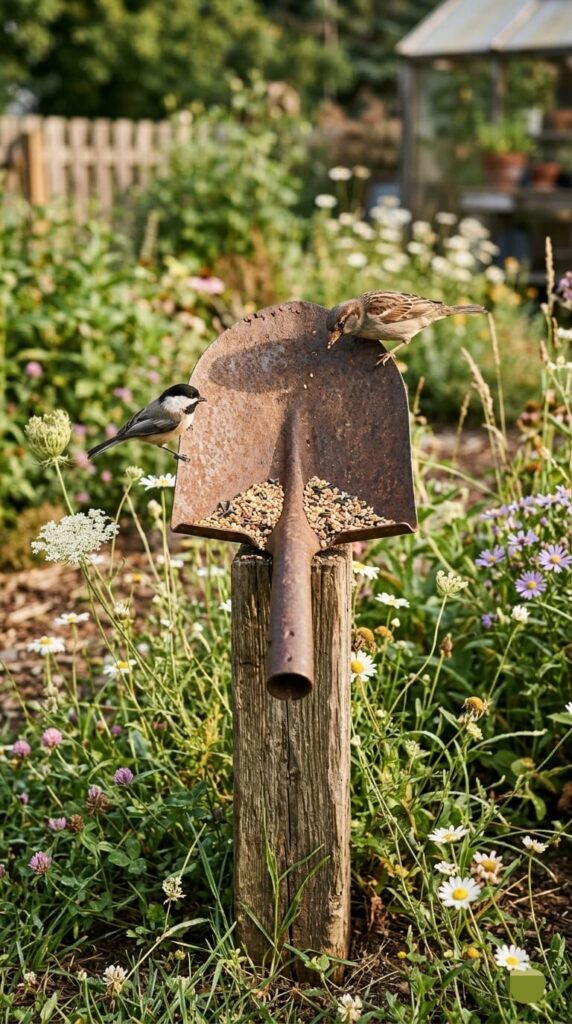
12. Make a Bird Feeder from a Shovel Head
Detach the shovel head from its handle and drill a few small drainage holes in the bottom of the blade. Mount it on a wooden post or hang it from a tree branch using sturdy wire, with the blade facing up like a shallow bowl.
Fill it with birdseed and watch it become a favorite spot for backyard visitors. The rusty metal blends beautifully into a natural garden setting, and the shape of the shovel head holds seed well without scattering too quickly in the wind.
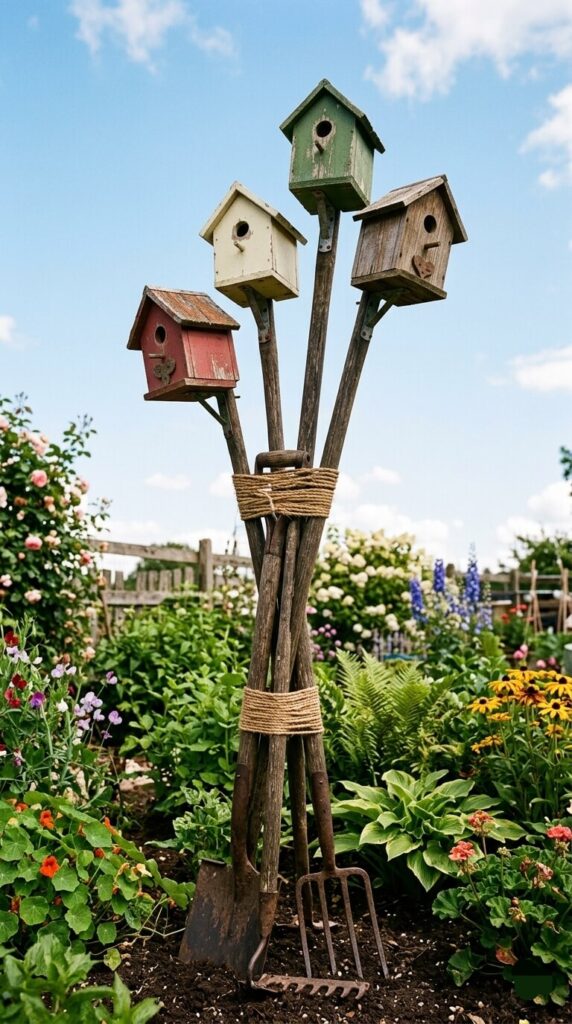
13. Stack Tools into a Rustic Birdhouse Pole Display
Take three or four old long-handled tools and lash them together side by side using jute twine or wire to form a tall, sturdy pole cluster. Mount a different style of birdhouse on top of each handle at slightly varied heights for a layered, eclectic look.
Drive the cluster firmly into a garden bed so it stands upright without wobbling. The mix of weathered wood handles and painted birdhouses creates a focal point that draws the eye across the yard and adds genuine vertical interest to flat garden spaces.
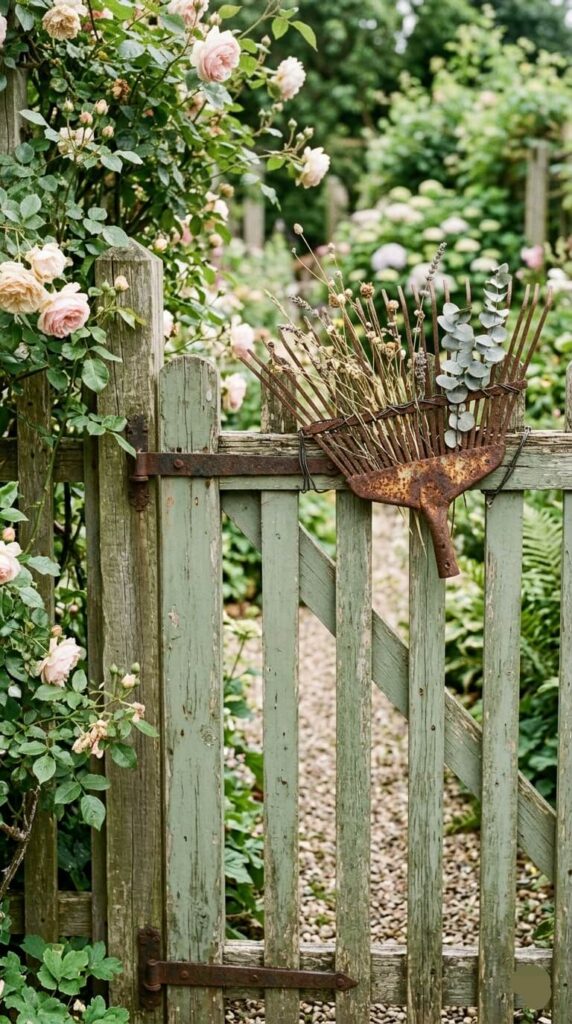
14. Use a Rake Head as a Garden Gate Accent
Attach an old rake head to the top or side panel of a wooden garden gate as a decorative accent. The metal tines add texture and an unexpected detail that makes even a plain gate look like it belongs in a farmhouse garden.
Wire or bolt it in place so it holds firm through regular use of the gate. You can leave the rake head in its natural, weathered state or wire in a small bunch of dried flowers or greenery through the tines for an extra decorative touch.
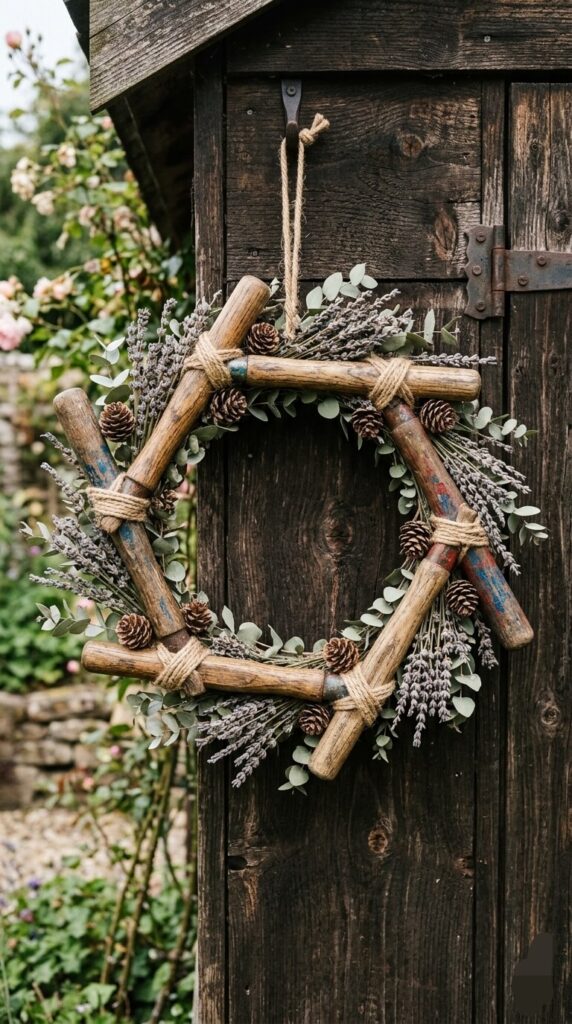
15. Turn Tool Handles into a Wreath Frame
Collect four to six short, similarly sized tool handles and arrange them in a circular shape, overlapping the ends to form a rough wreath frame. Lash the joints tightly with jute twine or thin wire to hold the shape together.
Weave in dried botanicals, small pinecones, eucalyptus sprigs, or faux greenery through the gaps in the handles. Hang the finished wreath on a garden shed door, a fence post, or the front gate for a rustic seasonal decoration that looks handmade in the best possible way.
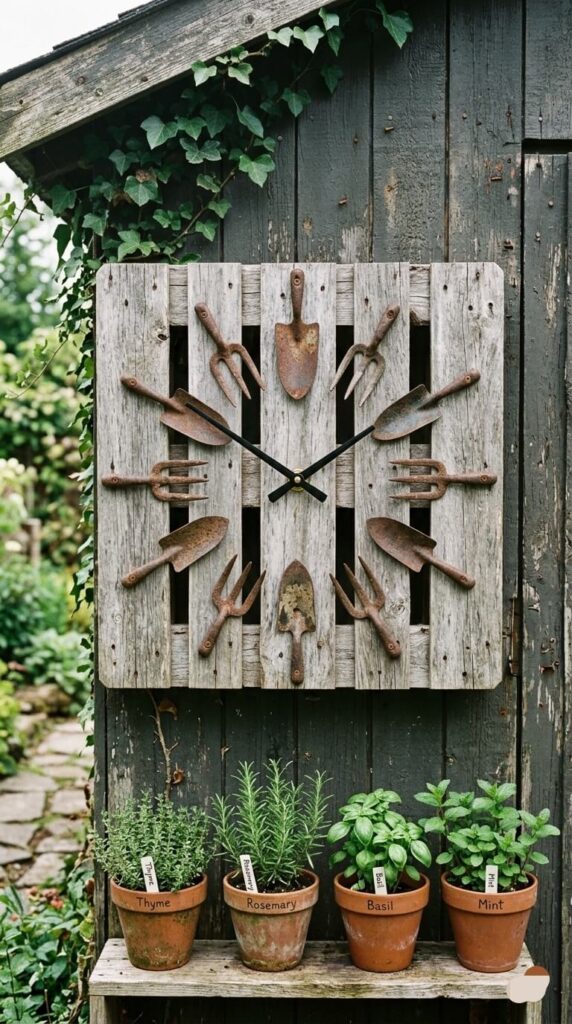
16. Create a Garden Clock from Old Tool Heads
Arrange a collection of small tool heads such as trowels, hand forks, and cultivators in a circle on a weathered wooden board or pallet, positioning them like numbers on a clock face. Add a basic clock movement kit from a craft store through the center of the board for a working timepiece.
This is one of those upcycled garden tools projects that looks far more complicated than it actually is. Mounted on a shed wall or fence, it becomes a genuine conversation piece that combines function with rustic outdoor art.
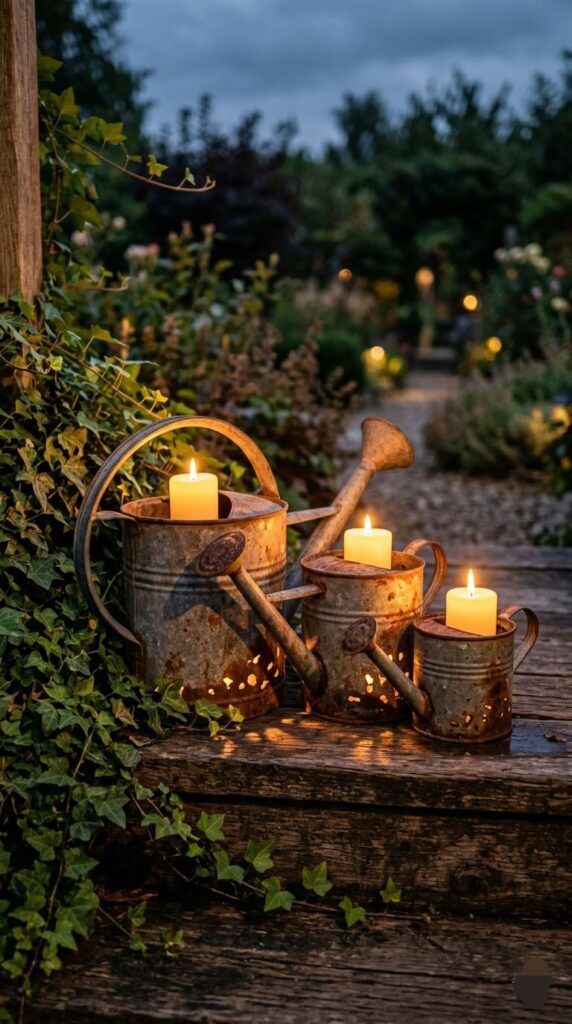
17. Use Watering Cans as Lantern Holders
Set a pillar candle or a battery-operated LED candle inside an old watering can and place it on a porch step, a garden table, or along a pathway edge. The spout and handle give the can a sculptural quality that a plain lantern simply does not have.
Group two or three watering cans of different sizes together for a layered display. If the cans have holes or rust spots, the light will flicker through them in the evening and cast small, warm patterns on the surrounding surfaces.
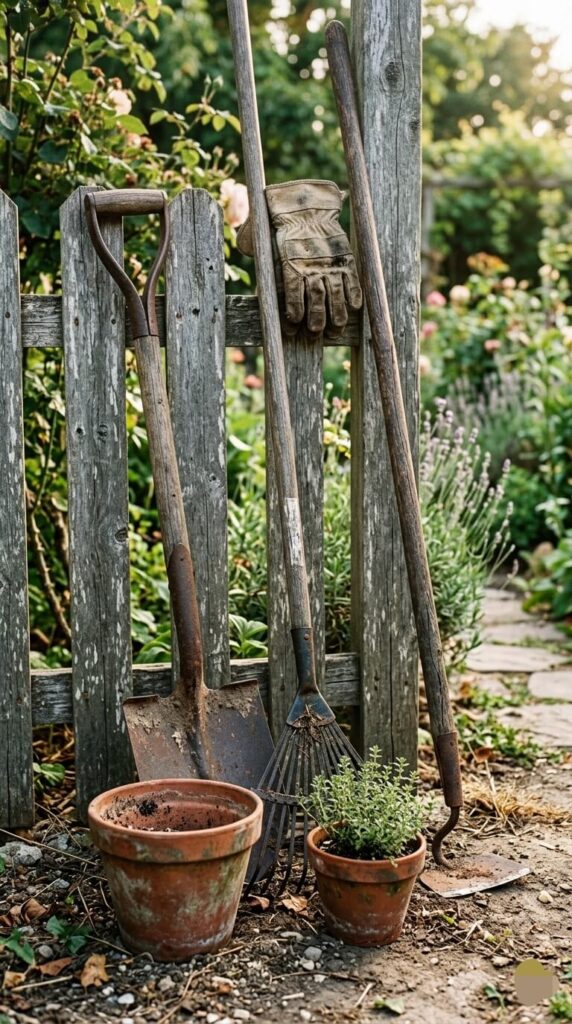
18. Lean Tools Against a Fence as a Styled Vignette
Sometimes the simplest approach is the most effective. Lean a small group of vintage tools such as a shovel, a rake, and a hoe casually against a wooden fence or garden wall, arranged as if someone just set them down mid-task.
Add a clay pot or two nearby, and maybe a pair of worn garden gloves draped over one of the handles. The overall effect is relaxed and authentic, and it requires no drilling, no mounting, and no special materials. It is the kind of detail that makes a garden feel genuinely inhabited.
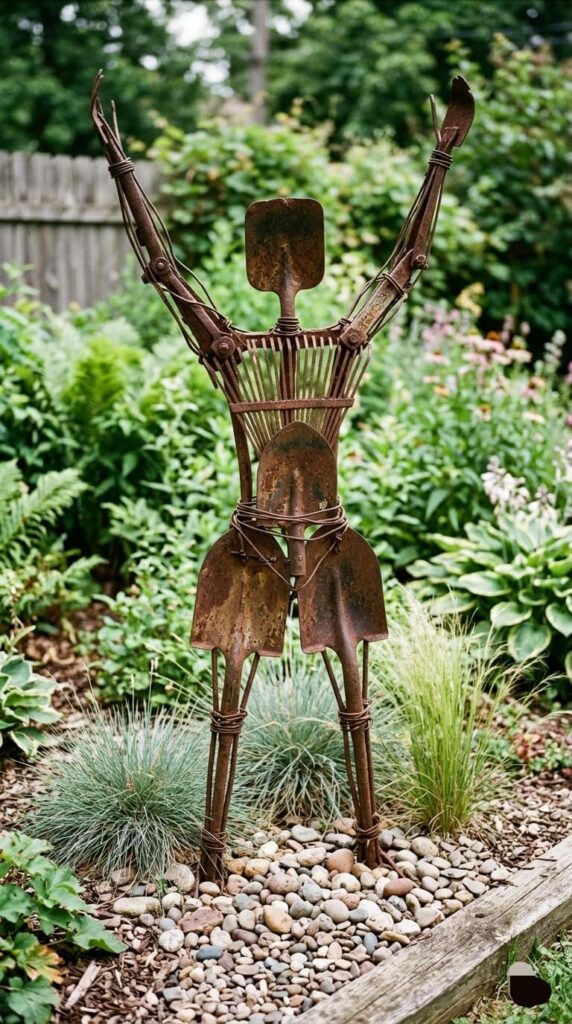
19. Wire Tools into a Metal Garden Sculpture
For a more hands-on project, gather a mix of broken tool heads such as rake heads, spade heads, and hoe blades and wire or weld them together into an abstract outdoor sculpture. The form can be anything from a rough human figure to a simple stacked tower.
Place the finished piece in a garden bed or on a gravel path where it will patinate naturally over time. Rust and weathering only add to the sculptural quality, making the piece look more interesting and intentional as the seasons pass.
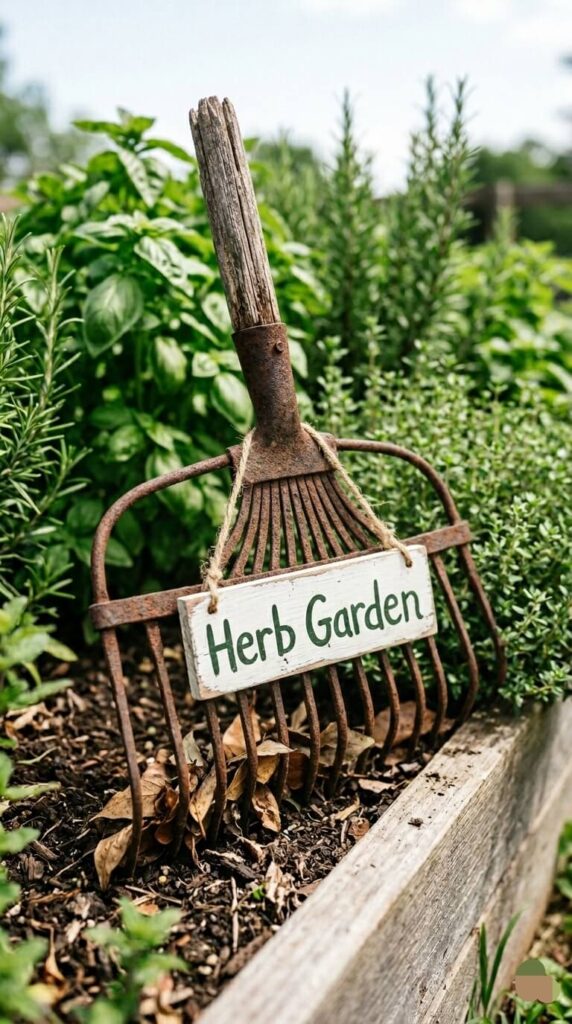
20. Use a Broken Rake as a Sign Holder
A rake with a broken handle still has plenty of use left in it as a sign holder. Push what remains of the handle into the soil so the rake head stands at an angle, then hang a small painted sign or a chalkboard tag from the tines using a piece of twine or a thin wire hook.
Use it to label a garden bed, point guests toward the backyard, or simply display a favorite garden quote. It is one of the best ways to get a second life out of a tool that would otherwise end up in the trash, and it costs nothing to make.
Frequently Asked Questions
What can I do with old rusty garden tools?
Rusty garden tools are actually ideal for outdoor decor because the rust adds natural character and a weathered look that is hard to fake. You can turn them into planters, wall art, sign holders, trellises, bird feeders, and much more. If you plan to display them outdoors long-term, a light coat of clear outdoor sealant will slow down further rusting without hiding the patina.
Can you leave rusty tools outside as decor?
Yes, and many people prefer the look of tools that have been left to weather naturally. If you want to slow down active rust without changing the appearance, wipe the tool down with a dry cloth and apply a thin coat of paste wax or a rust-inhibiting clear spray. This keeps the rustic look intact while protecting the metal from deteriorating too quickly.
What garden tools work best for rustic outdoor decor?
Long-handled tools like shovels, rakes, hoes, and pitchforks are the most versatile because they add height and can be driven into the soil or mounted easily. Smaller tools like trowels, hand forks, and cultivators work well for wind chimes, wreaths, and wall displays. Watering cans and wheelbarrows are fan favorites because their shapes are instantly recognizable and charming even when worn out.
What do you do with broken garden tool handles?
Broken handles are some of the most useful pieces for decor projects. Push them into the soil as garden path borders, bundle them into wreath frames, use them as stakes for hanging signs, or lash them together as part of a trellis structure. The wood grain on older handles often looks beautiful on its own, especially when it has aged to a silvery gray.
Where can I find old garden tools for decorating?
Estate sales, garage sales, thrift stores, and flea markets are the best sources. Tools picked up this way are often already aged and weathered, which means they are ready to use without any preparation. Farm auctions are another great option if you want more unusual pieces like old pitchforks, seed spreaders, or vintage watering cans. Most finds cost just a few dollars.
How do you make a trellis from old garden tools?
Push two or three long-handled tools vertically into the garden soil, spacing them about a foot apart. Lay additional handles or tool shafts horizontally between them at intervals, and secure each intersection with jute twine or zip ties. Plant climbing vines like beans, clematis, or sweet peas at the base and train them onto the structure as they grow. The whole project takes less than an hour and requires no special skills or power tools.
How do you display vintage garden tools as outdoor decor without mounting them?
The easiest approach is to lean them casually against a fence, shed wall, or garden gate as a styled grouping. Mix a few different tool types together and add a clay pot, a watering can, or a pair of old gloves nearby to complete the vignette. This no-drill method works especially well for renters or anyone who wants a display they can rearrange with the seasons.