
A boho dorm room depends on layered textures, warm color, and personal objects on display. A college dorm room works against all three: shared square footage, plain walls you can’t paint, and a strict no-nail policy in most housing contracts. Every piece of the boho look has a damage-free version that fits inside those rules. Below are 13 ways to build the full look, from the wall behind your bed to the floor space you actually have.

Cover One Wall in Peel-and-Stick Pattern Instead of Paint
Most dorm rooms come with plain white or beige cinder block walls, and painting is against the rules at nearly every school. A removable wallpaper wall solves this in one move. Cover the wall behind your desk or bed in a bold boho print such as terracotta arches, a Moroccan tile repeat, or an oversized palm leaf pattern, and the room reads like a boho dorm room the moment you walk in.
Measure the wall’s width and height first, then order enough rolls to cover it with about 10 percent extra for trimming. A standard roll runs close to 20.5 inches wide and 16.5 feet long, covering roughly 28 square feet, so most single dorm walls take two to three rolls. Wipe the wall down to remove dust, then apply from the top down, smoothing outward from the center to push out air bubbles.
Stick to one wall instead of the whole room. A single patterned wall reads as a deliberate design choice, while four walls in a bold print can overwhelm a space this size. Cinder block walls with heavy texture may need a smoothing primer sheet underneath the paper for the adhesive to hold evenly.

Mount a Macrame Wall Hanging as a No-Drill Headboard
A headboard is one of the most recognizable boho signals, and a dorm bed frame rarely has one built in. A large macrame wall hanging solves this without any hardware. Mounted at the head of the bed, it reads as a headboard from across the room and adds the woven texture the style depends on.
Hang it using four Command large picture hanging strips instead of nails. A full set of four pairs holds up to 15 pounds, which covers most cotton rope wall hangings sized for a twin bed. Clean the wall with rubbing alcohol first, since dust and oil stop the adhesive from bonding fully, then let the strips cure for about an hour before hanging any weight on them.
Check the wall surface before buying. Command strips grip painted drywall well but slide off unpainted cinder block or heavily textured surfaces. If your dorm walls are exposed block, use museum putty or a textured-surface adhesive strip instead, and test a small section first to confirm it holds overnight.

Layer Twin XL Bedding in Mixed Boho Patterns
Bedding covers the single largest surface in a dorm room, so it carries most of the visual weight of the look. Skip a single matching set and layer a solid or subtly patterned twin XL comforter with two or three accent textiles: a striped throw blanket, a printed duvet insert, and a few tasseled or embroidered throw pillows in colors that repeat elsewhere in the room.
Start with the comforter as your base color, then add pattern in smaller pieces so the mix doesn’t compete with itself. A common textile-styling rule is one dominant print, one smaller-scale print, and one solid, all sharing at least one color. Fold a throw blanket across the foot of the bed at an angle instead of flat, since a slight fold reads as more intentional than a flat layer.
Confirm the mattress size before ordering anything. Dorm beds use the twin XL size at 39 by 80 inches, four inches longer than a standard twin, and a standard twin comforter will leave the mattress exposed at the foot of the bed.

Trace Your Bed Frame or Ceiling Line With Warm String Lights
String lights are one of the fastest ways to bring warmth into a room lit mostly by a single harsh overhead fixture. Run a strand of warm white or amber LED lights along the underside of a lofted bed frame, around a window frame, or across the top of the wall where it meets the ceiling.
Attach the lights with adhesive light clips or small Command hooks instead of nails or staples, spacing them evenly along the frame or window edge. Battery-powered or USB-powered strands skip the outlet completely, which matters in dorms that limit how many items can be plugged into one power strip at a time.
Many colleges allow LED string lights but restrict incandescent mini lights, rope lights with exposed wiring, or anything not UL-listed, since these carry a higher fire risk in shared buildings. Confirm the specific rule in your housing handbook before you buy, since policies vary between schools.

Hang Faux Plants in Macrame Planters for Low-Light Windows
Greenery is a core part of the boho look, but most dorm windows face another building or get partial light for only part of the day. Faux plants remove that problem completely. Hang a trailing faux pothos or string of pearls in a small macrame plant hanger near the window, or set a faux fiddle leaf fig in the corner where a real plant would struggle.
Choose a plant hanger sized for a 6- to 8-inch pot, since anything larger gets heavy fast and outgrows the space next to a dorm window. Hang it from a Command hook rated for at least 5 pounds rather than the small size, since the pot and plant together usually weigh more than they look.
Mix in one or two textured pots, like a woven seagrass basket, instead of matching plastic planters throughout. A real, low-maintenance plant such as a pothos or snake plant can sit on a desk or shelf if your room gets a few hours of direct light, giving the corner a mix of real and faux that reads as more layered than an all-faux setup.

Ground the Room With a Jute or Shag Rug Sized to Your Floor Space
Dorm room flooring is almost always thin carpet tile or bare vinyl, neither of which carries any warmth on its own. A jute or shag area rug placed at the foot of the bed or in the open strip between the bed and desk grounds the layout and adds the textured, natural material the boho style relies on.
Measure the open floor space before ordering, since dorm rooms rarely have more than a narrow strip of usable floor once the bed, desk, and dresser are placed. A rug in the 3-by-5-foot or 4-by-6-foot range fits most single dorm layouts without blocking the door or closet swing. Use rug grippers or double-sided carpet tape instead of a rug pad with a rubber backing, since some schools restrict adhesives that can stain the existing carpet tile.
Jute brings a rougher, more natural texture, while a shag rug in cream or rust adds softness underfoot. Let your existing carpet color decide between them. A jute rug on top of a neutral gray dorm carpet stays close to the natural palette, while a shag rug in a warm terracotta tone adds contrast on a darker carpet.

Wrap Your Dorm-Issue Furniture in Wood-Grain Vinyl
Dorm desks, wardrobes, and dressers usually come in a laminate finish that clashes with a boho palette, often a cool gray oak or a shiny orange-toned wood grain. Peel-and-stick vinyl in a warmer wood tone, whitewashed oak, or a woven rattan print covers this in an afternoon and pulls the furniture into the same natural material story as your rug and plant hangers.
Clean each surface with soap and water, then let it dry fully before applying. Cut the vinyl a few inches larger than the panel, apply from one edge, and smooth outward with a credit card or squeegee to avoid trapping air. Wrap flat drawer fronts and desk surfaces first, since curved or grooved edges take more trimming.
Test a hidden corner before committing to a full piece. Dorm furniture finishes vary by building age, and some older laminate can pull up its own top layer along with the vinyl during removal at move-out. If the test spot comes off clean, the rest of the piece will too.

Split a Shared Room With a Two-Tone Palette and a Curtain Divider
A shared dorm room forces two people’s styles into one space, and a full boho takeover on one side while the other stays bare can make the room feel divided rather than designed. Agree on a shared neutral, like white, sand, or soft gray, as the base for both sides, then let each person add their own boho accents in a different accent color on top of it.
Hang a lightweight curtain from a spring-loaded tension rod between the two beds for a soft visual line, or for privacy when one roommate wants to nap or change. Tension rods wedge between two surfaces without any drilling, so they work between bed frames, closet openings, or window nooks. Choose a sheer or lightweight cotton panel rather than blackout fabric, since heavier curtains can pull a tension rod loose over time.
Keep the curtain optional rather than a permanent wall. Push it to one side during the day so the room reads as one cohesive space, and pull it closed only when privacy matters. A shared color base with two different accent palettes usually looks more finished than a hard split down the middle of the room.
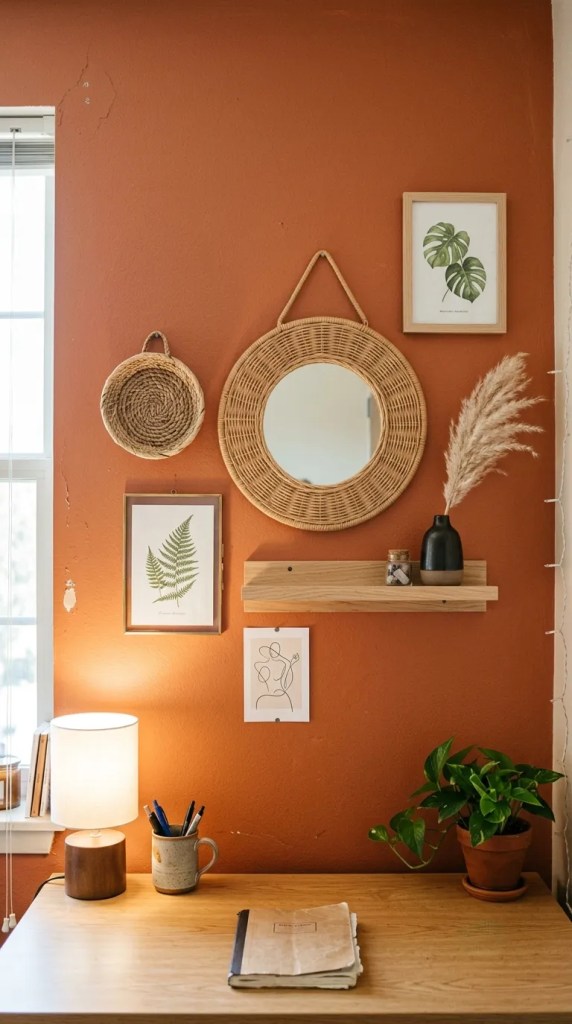
Cluster a Command-Strip Gallery Within Weight Limits
A gallery wall built from mixed prints, small woven pieces, and a round mirror is one of the most recognizable signals in a boho dorm room, and it works without a single nail. Group four to seven pieces of different sizes above the desk or bed instead of one large single print.
Lay the pieces out on the floor first to settle on a layout, then trace the arrangement onto painter’s tape on the wall so you can adjust before committing to adhesive. Hang the largest or heaviest piece first, centered at roughly 57 to 60 inches from the floor, then build the smaller pieces out from it. Match each item to the right strip size rather than defaulting to one type for everything.
Add up the total weight per cluster point rather than trusting the strip rating alone. A full set of four large Command strips holds up to 15 pounds, but that number applies to one item on its own hardware, not several lightweight pieces stacked on the same section of wall. Spread heavier frames across their own strips instead of doubling up on a single pair.

Swap Plastic Bins for Woven Storage Baskets
Under-bed storage is where a lot of dorm clutter lives, and clear plastic bins undercut a boho room the moment you glance under the bed frame. Woven seagrass or water hyacinth baskets hold the same off-season clothes and extra bedding while keeping the natural texture going into the parts of the room that still show.
Measure the clearance under your bed frame before ordering. Many dorm beds sit on risers that add a few extra inches of height, often enough for a low, wide woven bin to slide underneath. Choose baskets with a flat bottom over rounded ones, since flat bases use the available under-bed footprint more efficiently.
Check your school’s rules on bed risers before raising the frame for storage space. Many colleges cap how high a bed can sit for fire-safety and window-egress reasons, so confirm the limit first rather than buying risers that put you over it.

Style Your Desk Corner With Rattan and a Boho Lamp
The desk is where most of a dorm room’s actual daily use happens, yet it’s the area most boho guides skip entirely. Swap a plastic desk organizer for a rattan or bamboo tray, and set a small lamp with a woven or fringed shade next to your laptop instead of relying only on the overhead light.
Pick a warm-toned bulb, generally listed around 2700K on the packaging, rather than the cool white or daylight bulbs many desk lamps ship with. Warm light reads closer to candlelight and does more to soften a plain dorm desk than any single decor piece placed on top of it.
Confirm your dorm’s wattage or bulb restrictions before buying a lamp, since some housing policies limit total wattage per outlet or prohibit halogen bulbs specifically. A small LED lamp rated under 10 watts stays well under most limits while still giving off enough warm light for reading.

Drape a Tapestry Around a Lofted or Bunked Bed Frame
Lofted and bunked beds are common in dorm rooms and rarely get styled beyond the mattress itself. A lightweight cotton tapestry draped from the top rail of the frame turns the space underneath or beside the bed into a defined, softened corner, and it’s one of the most literal boho signals you can add to a room.
Loop the tapestry over the metal or wood top rail using fabric ties or curtain clips rather than any adhesive or hardware, since the frame itself holds the weight. Let it hang loosely down one open side for an airy, partial effect, or drape it across two sides to close off a small reading or study nook underneath a lofted bed.
Most fabric wall tapestries run somewhere around 60 by 80 inches or larger, generally enough to cover one full side of a lofted twin XL frame with room to spare. A lighter cotton weave drapes and folds more naturally than a heavy woven piece, which tends to hang stiff and flat instead of falling into soft folds.

Add Floor Poufs for Flexible Extra Seating
Dorm rooms rarely fit a second chair, and a pouf solves that without taking up permanent floor space. A round or hexagonal pouf in leather-look vinyl, woven cotton, or a tasseled cover adds boho-style seating that a roommate or friend can pull out during a study session and push back against the wall afterward.
Look for a pouf around 18 to 20 inches in diameter, small enough to tuck under a desk or raised bed frame when it’s not in use. Foam-filled poufs stay noticeably lighter to lift and move than pellet-filled ones, which matters if you plan to store it away between uses rather than leave it out permanently.
Pick a cover in a pattern or texture that repeats somewhere else in the room, like the same rust tone in your rug or the same woven texture as your plant hangers. A pouf that echoes an existing color or material reads as part of the room’s plan rather than a spare seat pulled in from somewhere else.
Frequently Asked Questions
Can you paint the walls in a college dorm room boho colors?
Most colleges prohibit painting dorm walls at all, since housing contracts require rooms to return to their original condition at move-out. Removable wallpaper, wall decals, or a fabric tapestry create the same color impact without touching the paint, and they come down cleanly when the semester ends.
Is removable wallpaper allowed in most dorm rooms?
Yes, in most dorm rooms, since it doesn’t damage the paint or wall surface underneath when applied and removed correctly. Some schools restrict adhesive products on cinder block or unpainted walls, so it’s worth checking the housing handbook or asking your RA before ordering a large amount.
How do you hang a tapestry in a dorm room without nails?
Command strips rated for the tapestry’s weight, curtain clips on a tension rod, or fabric ties looped over an existing bed frame all work without nails. Clean the wall first with rubbing alcohol if using adhesive strips, since dust stops them from bonding fully.
Can Command strips hold decor on cinder block dorm walls?
Command strips bond best to smooth, painted drywall and often slide off unpainted or heavily textured cinder block. For block walls, use museum putty, a textured-surface adhesive strip, or hang items from an existing bed frame or curtain rod instead.
How do you make a shared dorm room look boho without clashing with your roommate’s style?
Agree on one shared neutral base color, like white or soft gray, for both sides of the room, then let each person add their own boho accents on top of it. A shared base with different accent colors reads as coordinated even when the two sides aren’t identical.
How much does it typically cost to decorate a dorm room in boho style?
Cost depends heavily on how much you buy new versus secondhand, but a full boho dorm room refresh covering a rug, lighting, one wall treatment, and bedding accents commonly falls somewhere between $150 and $400. Thrifted baskets, hand-me-down textiles, or a single splurge item like the rug can shift that range in either direction.
How do you add boho style to a lofted or bunked dorm bed?
Drape a lightweight tapestry or curtain panel from the bed’s top rail using fabric ties or clip rings, string warm LED lights along the frame, and tuck a woven basket or two underneath for storage. Those three additions cover the bed, the lighting, and the space below it without any hardware.


