
Boho bedding does not need a full room overhaul or a big budget. The look comes from texture, pattern, and layering, and most of that can happen right on top of a mattress already in the room. These budget-friendly boho bedding ideas for teen girls focus only on the bed itself, covering sheets, duvets, pillows, and throws that can be sourced secondhand, dyed at home, or pieced together with basic sewing skills. Each idea below works whether the bed is in a shared bedroom or a dorm room with a twin XL mattress.

1. DIY Tie-Dye Sheet Set
A patterned boho sheet set from a home store often costs more than a plain white or cream cotton set dyed at home. Tie-dye adds an organic, one-of-a-kind pattern to plain cotton, and no two dye jobs turn out the same, giving the sheets that mismatched, collected-over-time look.
Spiral, crumple, and ice dye techniques all work well on cotton because the fiber holds fiber-reactive dye better than polyester blends do. Twist the sheet into a spiral for a sunburst pattern, or scrunch it loosely for a mottled crumple effect. Let the dye sit for at least 6 to 8 hours, or up to 24 hours for deeper, more saturated color, before rinsing until the water runs clear.
Earthy dye colors, rust, ochre, and moss green, read closer to boho than bright neon shades do. For a dorm bed, look for a twin XL sheet set (39 x 80 inches) so the fitted sheet actually reaches the corners of the longer mattress.

2. Oversized Duvet Drape
Boho bedding rarely looks tightly made. A duvet cover sized one notch larger than the mattress creates the relaxed, slouchy drape that separates a boho bed from a crisp, hotel-corner one.
A king-size cover, about 104 inches wide, laid over a full or queen bed adds roughly 7 extra inches of fabric down each side compared to a properly fitted size. That extra fabric pools slightly at the floor and softens the sharp edges of a made bed.
This trick costs nothing extra if the larger size turns out to be the cheaper option secondhand, since oversized covers often sit longer on thrift store shelves than standard sizes and get marked down first.

3. Vintage Flat Sheet Turned Duvet Cover
Thrifted flat sheets in floral, paisley, or batik prints often cost less than a plain new duvet cover. A slightly faded, well-washed vintage print brings in a mixed, lived-in feel no new print quite matches.
Fold a flat sheet in half, sew or fabric-glue two sides shut, and leave one end open with fabric ties or large safety pins to insert the duvet. A twin flat sheet, usually around 66 x 96 inches, wraps a standard twin duvet insert (68 x 86 inches) with room to spare.
Check the flat sheet’s label or measure it before buying, since older sheets sometimes run smaller than current standard sizes. Estate sales tend to carry larger, higher thread count flat sheets than typical thrift store racks.

4. Global Print Mix Pillow Shams
A matched pair of pillow shams reads as one purchase. Combining three different pillow sizes on the bed instead builds a collected, global-market look, like each piece arrived from a different trip.
Use a standard sham (about 20 x 26 inches), a Euro sham (26 x 26 inches), and a smaller lumbar pillow (around 12 x 20 inches). Pull each cover from a different print family, such as a block print, a mudcloth-style geometric, and a solid earthy tone, so the mix reads as a deliberate, curated choice.
Secondhand shops and clearance bins are strong sources for single pillow covers priced well below a matched set. Repeating one color across all three prints keeps the mix from looking scattered.

5. Fringe-Trim Throw Blanket
A plain waffle-knit or cotton gauze throw looks unfinished on its own next to patterned bedding. Hand-tied fringe along one edge gives the hem a frayed, handmade texture.
Cut the blanket edge into strips roughly half an inch wide and about 3 inches long, then knot each strip once for texture. Work from one corner across the full edge so the fringe sits even.
Drape the throw across the foot of the bed, folded in thirds, with the fringed edge left hanging visible over the side. This technique works on a throw already owned or one found secondhand at a thrift store.

6. Macrame Bed Runner
A macrame runner draped across the foot of the bed adds raw, hand-knotted texture without covering up the printed sheets underneath it.
Basic macrame uses 3mm or 4mm cotton cord and only two knots, the square knot and the lark’s head knot, so a first runner can be finished in an evening. Cut cord lengths about four times the finished runner length to allow for knotting.
Aim for a width around 20 inches and enough length to hang 8 to 10 inches past the mattress edge on each side. A runner in natural, undyed cord pairs with almost any sheet print already on the bed.

7. Chunky Knit Throw Layer
A thin, store-bought throw disappears against thick bedding. An arm-knit or jumbo crochet throw, made from a few pounds of thick roving yarn, adds the oversized texture that gives a bed real depth and dimension.
No needles are needed for the arm-knit version, just hands and yarn thick enough to hold its shape without tight knitting. A standard finished throw runs about 50 x 60 inches, big enough to fold across the foot of the bed or drape over one corner without swallowing the whole duvet.
Roving yarn in a neutral or earthy shade blends with almost any print underneath it, while a brighter shade works as a standalone accent color against a plain duvet.
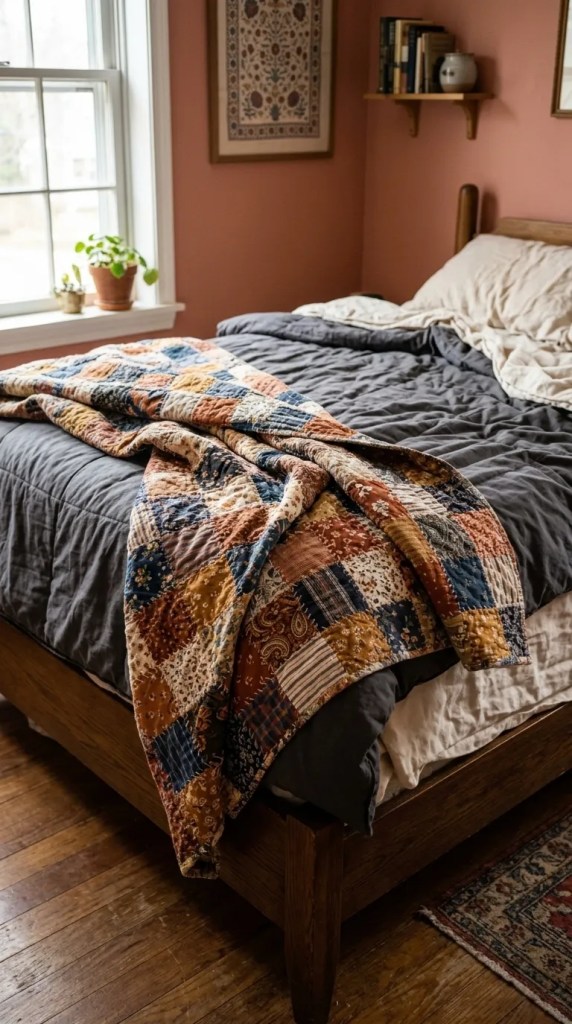
8. Patchwork Quilt Layer
Mismatched fabric squares sewn into a patchwork quilt add a pieced-together look when layered on top of a plain comforter or duvet cover.
Cut squares to a consistent size, often 5 inches, sew them into rows, then join the rows into a full top before adding batting and backing. Scrap fabric from old clothing or remnant bins keeps the material cost low.
A quilt does not need to cover the whole bed to work. Folded and draped across the foot of the mattress, even a lap-size quilt, roughly 40 x 50 inches, reads as a deliberate styling choice on top of the bed.

9. Embroidered Vintage Pillowcases
Plain vintage pillowcases, the kind sold in bulk at estate sales and thrift stores, take well to simple hand embroidery and turn a blank cover into a one-of-a-kind piece.
A scattered floral motif, a line of running-stitch fringe, or a monogram in the corner all work well as a first project. A basic embroidery hoop, 6 to 8 inches across, and a few skeins of cotton floss cover a standard pillowcase without much material cost.
Two mismatched embroidered pillowcases layered over solid-color pillows behind them add pattern without buying a full matched sham set. Bright floss colors show up better against a faded vintage cotton than against bright white fabric.

10. Sari Fabric Bed Canopy
A canopy is one of the few boho bedding details that changes the whole feel of a bed without touching the sheets or duvet at all. A length of sari fabric or lightweight cotton voile, hung above the bed, creates that effect with no building or installation.
Hang the fabric from a ceiling hook or a curtain rod mounted above the headboard, letting both sides fall open around the bed. Sari fabric typically runs about 45 inches wide and 5 to 6 yards long, enough to drape both sides of a twin or full bed with fabric pooling on the floor.
Secondhand sari fabric, sold by length at thrift stores and online resale sites, costs far less than a pre-made canopy kit. A sheer or lightweight weave lets more light through than a heavy cotton, which keeps the effect airy instead of closing the space in.

11. Bolster Pillow Accent
A flat throw pillow cannot replicate the long, cylindrical silhouette common to Indian and Moroccan interiors. Trading one flat pillow for a bolster brings that shape onto the bed.
Standard bolsters run about 6 inches in diameter and 20 to 36 inches long, long enough to stretch most of the width of a twin or full bed when placed against the headboard. Position it flat against the headboard first, then layer flat pillows in front of it.
A secondhand bolster cover in a printed or tasseled fabric costs less than a new matched throw pillow. Pairing one bolster with two or three flat pillows adds height to the pillow arrangement without buying a full new set.

12. No-Sew Pom-Pom Trim Pillows
A plain solid pillow cover looks unfinished sitting next to patterned boho pieces. Pom-pom trim, sold by the yard at craft stores, fixes that without a sewing machine.
Glue the trim directly onto the edge of the cover with fabric glue or a hot glue gun. A standard 18 x 18 inch pillow cover needs about 2.5 yards of trim to wrap all four sides with enough overlap to finish the ends cleanly.
This detail matches the fringe and tassel details common throughout boho bedding, turning a plain cover into a coordinated piece without buying a new one. Mixed pom-pom colors along a single trim read more playful than a single solid color.

13. Reversible Two-Print Duvet
A duvet cover with a different print on each side effectively doubles the bedding options on a single purchase, giving the bed two distinct looks without buying two separate covers.
Flip the duvet inside out for a seasonal refresh, from a busy print to a solid neutral, or for laundry day when one side needs a break from direct sunlight fading. Check the cover’s zipper or button closure works from both sides before relying on it as a daily flip.
Reversible covers show up often in secondhand shops because sellers rarely realize both sides are usable, so pricing tends to match a single-print cover instead of a double-sided one.
Frequently Asked Questions
What makes bedding boho style?
Boho bedding relies on layered textures, mixed prints, and natural fibers. A base layer of cotton or linen sheets, a duvet or quilt with visible texture, and a mix of pillow prints and throws combine to build that layered look, with each piece contributing its own texture and print to the bed.
How can I get boho bedding on a tight budget?
Focus spending on one statement piece, such as a patterned duvet cover or a macrame runner, and fill in the rest with secondhand sheets, thrifted pillow covers, and DIY details like tie-dye or fringe trim. Buying pieces separately from different sources usually costs less than a matched set and reads more authentically boho.
What colors work best for boho bedding in a teen bedroom?
Earthy neutrals such as cream, terracotta, olive, and rust form a base that mixes well with almost any pattern layered on top. A teen bedroom can lean brighter with jewel tones like burnt orange or deep teal mixed into pillows and throws, while keeping the sheets and duvet in a neutral base so the palette does not compete with itself.
Can I mix different patterns on my bed without it looking messy?
Yes, if the patterns share a color family. Pulling one or two colors that repeat across a floral duvet, a geometric pillow, and a solid throw ties mismatched prints together. Varying the scale of each pattern, one large, one small, one solid, also keeps a mixed bed looking intentional.
Do I need a duvet or a comforter for a boho look?
Either works, though a duvet cover offers more flexibility on a budget since the cover can be swapped or thrifted separately from the insert. A comforter is one piece, harder to layer with a second print underneath, while a duvet cover can be changed seasonally or replaced without buying new fill.
Where can I find cheap boho bedding pieces?
Thrift stores, estate sales, and secondhand marketplaces are strong sources for flat sheets, pillowcases, and throws with the kind of vintage prints boho style uses. Craft stores carry inexpensive trim, cord, and dye for the DIY projects, and clearance sections at home goods stores often mark down single pieces like shams or throws that did not sell as part of a full set.
How do I layer bedding like a boho bedroom?
Start with fitted and flat sheets in a solid or subtle print, add a duvet or quilt with more texture or pattern, then finish with two or three pillows in mixed prints and a folded throw or runner across the foot of the bed. Building from smooth to textured, and from solid to patterned, keeps each layer visible against the one underneath it.


