
If your lease says no painting, or you would rather not deal with primer and touch-up cans before you move out, you can still make a rental bathroom look far more expensive than it did on move-in day.
None of the ideas below touch a wall, a cabinet door, or a ceiling with a paintbrush. Instead, they use surface treatments, hardware swaps, and layered finishes that do the same visual work as paint, and every one of them comes off clean when the lease ends.

1. Skip the Paint, Wrap the Cabinets Instead
Vanity cabinets take up more visual space in a bathroom than almost anything else in the room, which makes them the biggest payoff for a paint-free upgrade. Self-adhesive vinyl wrap, sold in rolls between 24 and 48 inches wide, applies directly over laminate, wood, or melamine cabinet doors without sanding or primer.
A matte charcoal or deep walnut woodgrain finish reads as custom cabinetry rather than a rental fix. Smooth the wrap with a plastic scraper or an old gift card to push out air bubbles, then trim the edges with a utility knife along the cabinet frame.
At move-out, a hairdryer on low heat softens the adhesive so the wrap lifts off in one piece, leaving the original finish underneath untouched.

2. Swap the Hardware for Brass or Matte Black
Cabinet pulls, the towel bar, the toilet paper holder, and the robe hook are the fastest hardware change to make and among the most noticeable.
Before buying anything, measure the distance between the existing screw holes on each pull, since most cabinet hardware follows a standard spacing of either 3 inches or 96 millimeters center to center. Choosing new pulls in unlacquered brass or matte black in that same spacing means the new pieces thread straight into the existing holes with no new drilling.
Keep the original hardware in a labeled zip-top bag inside a drawer so it can go back on before you move out. A dozen new pulls and one towel bar typically cost less than a single gallon of paint, yet change the finish of the whole room.

3. Add a Marble-Look Peel-and-Stick Countertop
A dated laminate vanity top is one of the fastest tells that a bathroom is a rental, and countertop paint kits require sanding, multiple coats, and a cure time that eats into a weekend. A peel-and-stick countertop covering in a marble or travertine print skips all of that.
Look for a covering rated for wet areas, and wrap the material slightly under the front edge of the counter so water from hand washing cannot work its way underneath. Keep the seam away from the spot directly behind the faucet, where standing water collects most, so the edge does not lift over time.
The same material works well on a windowsill or a floating shelf above the toilet, which extends the stone look beyond just the counter.

4. Cover Dated Tile with Individual Tile Transfers
Many rental bathrooms still carry tile from decades ago, in colors like pale pink, harvest gold, or seafoam green, and painting over tile requires an epoxy kit that is messy and hard to reverse. Individual tile transfer stickers solve this without touching the grout lines at all.
Each transfer is cut to the exact size of one tile and pressed on individually, so the grout stays visible and the tile pattern reads as real instead of a printed sheet stretched across the wall.
A patterned cement-look transfer on a tub surround or backsplash adds the kind of graphic detail usually found in a renovated bathroom, and testing one on a hidden tile first avoids surprises before committing to the whole wall.

5. Dress One Wall in Textured Peel-and-Stick Wallpaper
Full-room wallpaper can overwhelm a small bathroom and cost more than the budget allows, but one wall, usually the one behind the vanity or sink, gives the same designer impact for a fraction of the material. A vinyl-coated peel-and-stick paper in a grasscloth or fluted panel texture adds depth that flat paint alone cannot fake.
Choose a moisture-resistant version labeled specifically for bathrooms, since standard peel-and-stick paper can lift in a room with regular shower steam.
Starting the first strip from the corner farthest from the door keeps any small misalignment out of the sightline when you walk in, which matters more in a small space where every angle is visible.

6. Lay Stone-Look Vinyl Tiles Over the Existing Floor
Floor space is the largest surface in most bathrooms after the walls, and a worn or outdated floor undercuts every other upgrade in the room. Self-adhesive vinyl floor tiles in a marble or slate print, usually sold in 12 by 12 inch squares around 1.5 to 2 millimeters thick, install directly over existing tile, linoleum, or sheet vinyl once the floor is cleaned and fully dry.
Staggering the pattern the way a professional installer would, rather than lining up every seam in a grid, is what makes the finished floor look installed instead of applied on top.
These tiles lift off with a heat gun and a putty knife when the lease ends, without adhesive residue on most floor types.

7. Treat the Ceiling Like a Fifth Wall
The ceiling is the one surface in a rental bathroom that almost nobody decorates, which makes it an opening rather than a limitation.
If the lease restricts wall paint but says nothing about the ceiling fixture, swapping a builder-grade flush mount light for a small decorative one, and keeping the original boxed up for move-out, changes the feel of the room every time you look up.
Where the fixture itself cannot be swapped, a peel-and-stick ceiling medallion installed around the existing base adds the kind of molded detail found in older, higher-end buildings. Even a small round medallion, roughly 12 to 18 inches across and centered on the fixture, gives the ceiling a finished edge instead of a plain gap where the light meets the drywall.

8. Hang an Oversized Framed Mirror
Most rental bathrooms come with a plain, frameless mirror glued directly to the wall, and prying it off risks damaging the drywall behind it. Rather than removing it, a clip-on mirror frame kit slides over the existing edge and locks in place with small tension clips, no adhesive on the wall required.
Choosing a wide profile, around 3 to 4 inches, in the same brass or matte black as your new hardware ties the whole room together.
If the existing mirror is small, lean a second, larger mirror against the wall beside the vanity instead of trying to replace what’s already mounted. A floor mirror in the 30 by 60 inch range bounces light around the room and adds height without a single hole in the wall.

9. Install a Rental-Safe Rainfall Showerhead
The showerhead is one of the few plumbing fixtures a renter can swap without a wrench or a call to maintenance. Most models thread on by hand or with a strip of Teflon tape wrapped clockwise around the existing pipe threads, and the whole job takes under ten minutes.
A wide rainfall head, 8 to 10 inches across, changes the entire shower experience, and under current federal water standards, even these larger heads are capped at 2.5 gallons per minute, so the upgrade in feel does not come with a jump in your water bill.
Keep the original showerhead in a labeled bag with the rest of your saved hardware, since swapping it back takes the same ten minutes when you move out.

10. Raise the Shower Curtain Rod to the Ceiling
A shower curtain rod mounted at the standard height, usually around 75 inches from the floor, sits well below where most ceilings actually are, and that gap reads as low and cramped.
A tension rod costs little and holds without drilling, so mounting it 6 to 8 inches higher, closer to the ceiling line, immediately stretches the whole wall upward.
Pair the raised rod with an extra-long curtain in the 84 or 96 inch range instead of the standard 72 inch length, so the fabric still reaches the tub floor. A curtain with a weighted hem keeps the extra length from billowing into the shower spray while you rinse off.
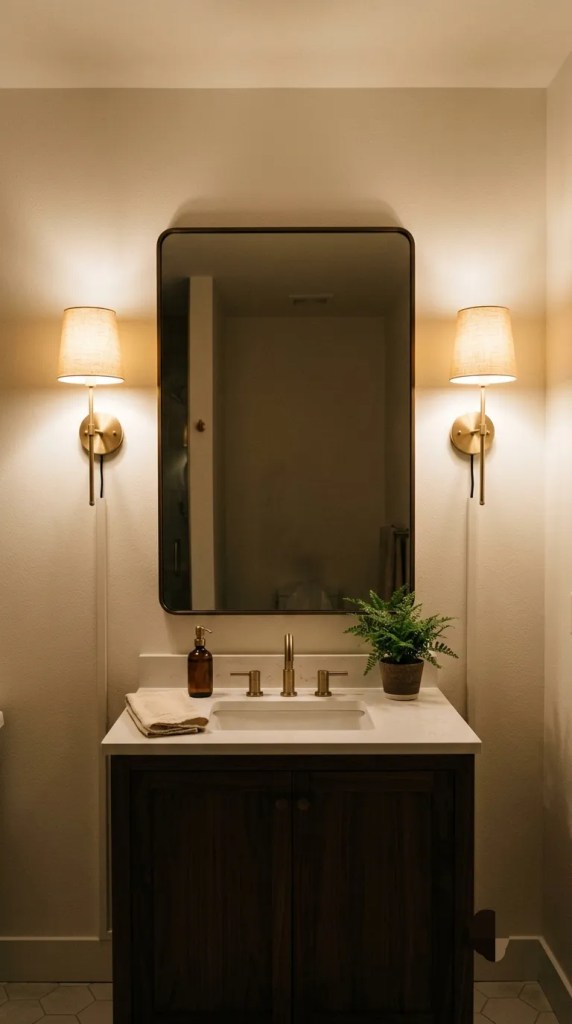
11. Layer In Plug-In Sconces with a Dimmer
Hardwired sconces are off the table in most leases, but plug-in wall sconces solve the same problem without an electrician. These mount with adhesive hooks rated for the fixture’s weight, and the cord tucks into a paintable cord channel that runs down to the nearest outlet, so it disappears into the wall line instead of hanging loose.
Adding an inline dimmer switch on the cord itself lets you drop the light down low in the evening, which is the same layered lighting effect designers use in remodeled bathrooms.
Two sconces flanking the mirror, instead of one overhead fixture doing all the work, is what makes the light feel considered rather than accidental.

12. Bring In a Freestanding Ladder Shelf
Wall-mounted shelving usually means anchors and drywall patches at move-out, but a freestanding ladder shelf leans against the wall and holds just as much without a single screw.
A five-tier model, typically around 70 inches tall, fits into the narrow gap beside a toilet or tub that most bathrooms waste. Rolled towels stacked on the lower rungs and a woven basket on top turn open shelving into a display instead of visible storage.
Because the shelf is freestanding, it moves with you to the next apartment instead of staying behind as a fixture.

13. Style a Vanity Tray with Refillable Glass Dispensers
Countertop clutter is one of the fastest ways a bathroom reads as unfinished, no matter how nice the walls look.
Pouring shampoo, hand soap, and lotion into matching glass pump dispensers, then grouping them on a single tray, does more for the counter than almost any other five-minute change. A metal or marble-look tray also catches drips and water rings, which keeps the counter surface itself protected without any sealant or coating.
Label each dispenser on the base with a small tag so guests, or you at 6 a.m., know which bottle is which.

14. Build a Gallery Wall with Command Strips
An empty wall above the toilet or beside the mirror is often the most overlooked space in a rental bathroom, and it does not need a single nail to fill it.
Adhesive strips rated for the weight of each frame, usually around 1 pound for small strips and up to 4 pounds for the larger size, hold securely in bathroom humidity as long as the wall surface is clean and dry before you apply them. Choosing metal or acrylic frames instead of paper prints matters here, since paper can ripple from shower steam over time.
Grouping four or five small pieces in mismatched frames but a matching finish gives the wall the layered look of a much larger art collection, and every piece comes down clean when your lease ends.
Frequently Asked Questions
What is the easiest way to make a rental bathroom look expensive without painting?
Swapping the cabinet hardware and towel bar to a matte black or brass finish gives the fastest visible change for the least effort. Since new pulls in the same screw spacing thread straight into the existing holes, the whole swap takes under an hour and needs no tools beyond a screwdriver.
Can I update bathroom hardware without losing my security deposit?
Yes, as long as you keep the original hardware and reinstall it before you move out. Store the old pulls, showerhead, and any other swapped pieces in a labeled bag inside a drawer so nothing gets lost between now and your move-out inspection.
How do I cover ugly bathroom tile without painting it?
Individual tile transfer stickers, cut to match the size of one tile, press on top of the existing tile without touching the grout lines. This keeps the tile pattern looking real instead of like a printed sheet, and the transfers peel off cleanly when your lease ends.
Will peel-and-stick wallpaper damage rental bathroom walls?
A wallpaper labeled for bathroom or wet-room use, applied to a clean and fully dry wall, comes off without pulling paint or leaving residue in most cases. Testing a small section in a low-visibility spot, like inside a cabinet door, tells you how the adhesive reacts to your specific wall surface before you commit to a full panel.
How can I add color to a bathroom if I am not allowed to paint?
Color can come from textiles, tile transfers, and wallpaper instead of the walls themselves. Rolled towels in a bold shade, a patterned tile transfer on the tub surround, or a single wallpapered wall behind the vanity all bring in color without a paintbrush.
What is the best flooring option for a rental bathroom with no permanent installation?
Self-adhesive vinyl floor tiles in a stone or marble print install directly over most existing floors once they are cleaned and dry. Staggering the tile pattern instead of lining every seam up in a grid is what makes the finished floor read as installed rather than applied on top.
How do I make a small rental bathroom feel like a hotel bathroom?
Layered lighting from plug-in sconces, an oversized mirror, and matching glass dispensers on a vanity tray do most of the work here. These three changes address light, reflection, and countertop clutter, which are the three things that separate a hotel bathroom from an average one.

