
An upstairs bathroom without a window can feel darker and more enclosed than other bathrooms, especially when the room is small. With no natural daylight coming through the walls, the space depends on lighting, reflective surfaces, color, layout, and ventilation to stay functional and inviting.
The strongest improvements come from matching each design choice to the problem you see in the room. Better lighting helps with darkness. A larger mirror can improve the sense of space. A floating vanity reduces visual weight. A skylight or sun tunnel can bring in actual daylight when the building allows it.
Here are 15 upstairs bathroom ideas for a bathroom with no windows, with each one focused on a specific design problem.

1. Layer Several Light Sources Instead of Using One Ceiling Fixture
A single ceiling light rarely does enough for a bathroom without windows. It may provide general illumination while leaving the vanity area shadowed.
Use ambient lighting for overall illumination, then add task lighting around the vanity. Recessed ceiling fixtures can provide the base layer, while wall lights or an illuminated mirror can improve the light at the sink.
A small accent light can also draw attention to a niche, artwork, or textured wall. Layering the sources spreads illumination around the room instead of concentrating it overhead.
Best for: Bathrooms that still feel dark after the main light is switched on.
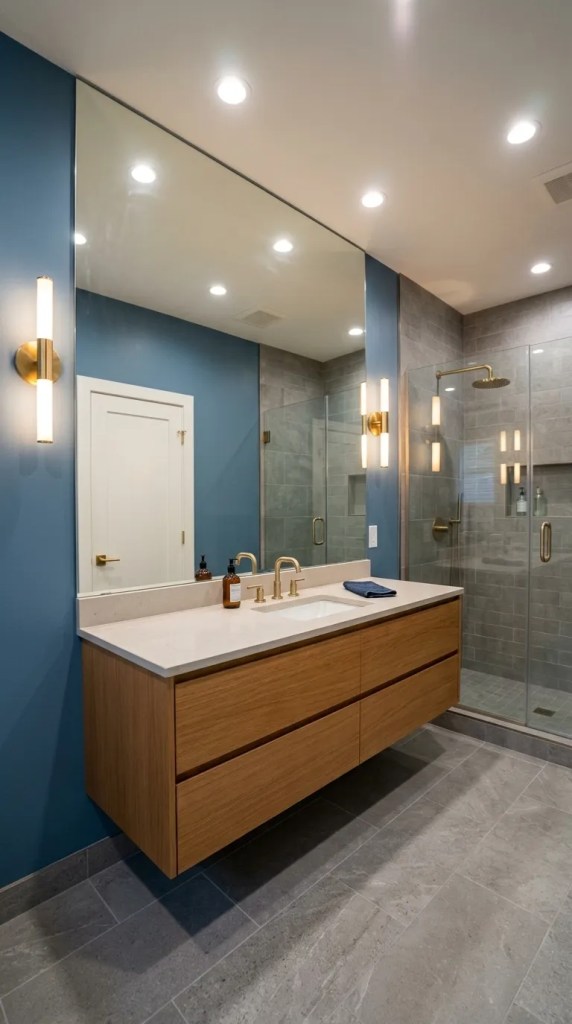
2. Install a Large Mirror to Reflect More Light
A large mirror can make a windowless bathroom feel more open while helping reflect the light already available.
Consider a wider mirror above the vanity, particularly in a compact bathroom. A broad reflective surface can visually extend the room and keep the vanity wall from feeling heavy.
Place the mirror where it can catch light from the main fixtures. It will not create additional light, but it can help spread the available illumination and give the room more visual depth.
Best for: Small upstairs bathrooms that feel enclosed or visually narrow.

3. Choose a Backlit or Illuminated Vanity Mirror
An illuminated mirror can improve the area where you need clear light most often: the vanity.
The glow around the mirror adds another lighting layer while keeping the wall visually clean. A frameless design can work well in a compact bathroom because it keeps the mirror area visually open.
This is different from simply choosing a large mirror. The large mirror focuses on reflection and scale, while an illuminated mirror adds usable light around the sink.
Best for: Bathrooms where the vanity feels shadowy or the ceiling fixture does not provide enough task lighting.

4. Use Light-Colored Wall and Ceiling Finishes
Light finishes can help available artificial light spread across the room. White is one option, but warm white, cream, pale beige, and light greige can also keep the space bright without making it feel stark.
The ceiling matters too. A light ceiling keeps the upper part of the room from becoming visually heavy.
If you are choosing tile, consider both color and surface finish. Pale tile with a subtle sheen can reflect more light than a dark, highly absorbent finish.
Best for: Bathrooms that need a brighter overall appearance.

5. Add Glossy or Reflective Surfaces
Reflective finishes can help distribute the light that is already in the room. Glossy tile, polished stone, glass, mirrors, and reflective metal fixtures are useful options.
You do not need a glossy finish on every surface. Choose one or two areas where reflection will make the most difference, such as the shower walls, vanity backsplash, or a feature wall.
Too many reflective finishes can make a small bathroom feel busy, so balance them with quieter surfaces and a limited material palette.
Best for: Bathrooms that have adequate lighting but still look dull or flat.
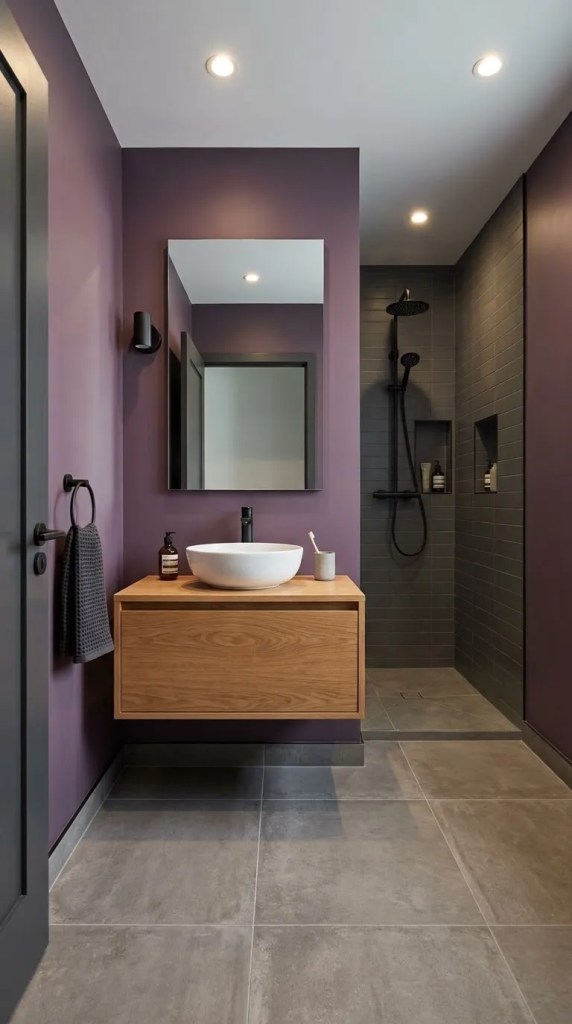
6. Use a Floating Vanity to Open Up the Floor
A bulky vanity can make a small upstairs bathroom feel crowded. A floating vanity leaves some floor visible underneath, which creates a more open visual line.
Wall-mounted cabinetry also makes floor cleaning easier and can be paired with a large mirror for a lighter-looking vanity zone.
Choose storage based on what you need to keep inside the cabinet rather than filling the wall with a larger unit than the room requires.
Best for: Compact bathrooms where the vanity adds too much visual weight.

7. Use a Mirrored Medicine Cabinet for Storage
Exposed toiletries can quickly make a small bathroom feel cluttered. A mirrored medicine cabinet gives you concealed storage while preserving the reflective function of the mirror.
Use it for smaller everyday items such as skincare products, grooming supplies, and medicines. Keeping these objects behind the mirrored door leaves the vanity area cleaner and easier to maintain.
This approach is especially useful when floor space is limited because storage is built into the wall area above the sink.
Best for: Bathrooms where countertop clutter is one of the main visual problems.

8. Keep the Countertop Visually Clear
A bathroom can feel crowded when bottles, brushes, containers, and accessories cover the vanity.
Store everyday products inside the vanity or mirrored cabinet when possible. Keep only the items you use frequently within reach, and group small objects in one tray if you want them visible.
One or two decorative details can add personality without filling the entire countertop. The open surface also gives the mirror and backsplash more visual impact.
Best for: Bathrooms that feel cramped because of visible clutter.

9. Use a Glass Shower Enclosure Instead of a Visual Barrier
A shower enclosure can become a major visual block in a small bathroom. Clear glass keeps the sightline open from the vanity to the shower area and allows light from the room’s fixtures to travel through the space.
A frameless or minimally framed enclosure can be useful in a compact upstairs bathroom. Keep the shower finishes coordinated with the rest of the room so the enclosure reads as part of one continuous space.
Best for: Small bathrooms where the shower makes the room feel divided.

10. Add a Sun Tunnel or Skylight Where the Structure Allows
When the lack of daylight is the main concern, a roof-based solution can change the room itself. An upstairs bathroom may offer access to the roof, making a skylight or sun tunnel worth investigating.
A sun tunnel can bring natural light into a room where a full skylight is difficult because of the roof structure or available space. The exact solution depends on the roof, the location of the bathroom, waterproofing requirements, and local building rules.
This is a larger renovation than changing a mirror or light fixture, so it makes sense when natural daylight is a high priority.
Best for: Upstairs bathrooms where the roof layout makes a daylighting project feasible.

11. Use Wallpaper or Pattern to Give the Room a Focal Point
A bathroom without a window has no outdoor view to provide visual interest, so a patterned wall can help establish a focal point.
Try wallpaper rated for bathroom conditions, patterned tile, or another suitable wall treatment behind the vanity or in another controlled area. One feature wall can add character without making every surface compete for attention.
Keep the remaining finishes restrained so the patterned area remains the main visual feature.
Best for: Bathrooms that feel plain or lack a strong focal point.

12. Consider a Dark, Moody Scheme Instead of Fighting the Lack of Windows
A windowless bathroom can also support a deeper, more atmospheric color scheme. Charcoal, deep green, navy, brown, and other rich shades can create a more intimate look when the lighting is planned carefully.
Use layered lighting to keep the room comfortable and pair dark finishes with selected reflective surfaces. A large mirror, glass shower enclosure, or polished hardware can keep the deeper palette from feeling visually heavy.
Choose this approach when atmosphere matters more to you than maximizing the room’s apparent brightness.
Best for: Bathrooms where a dramatic, intimate mood fits the overall design.
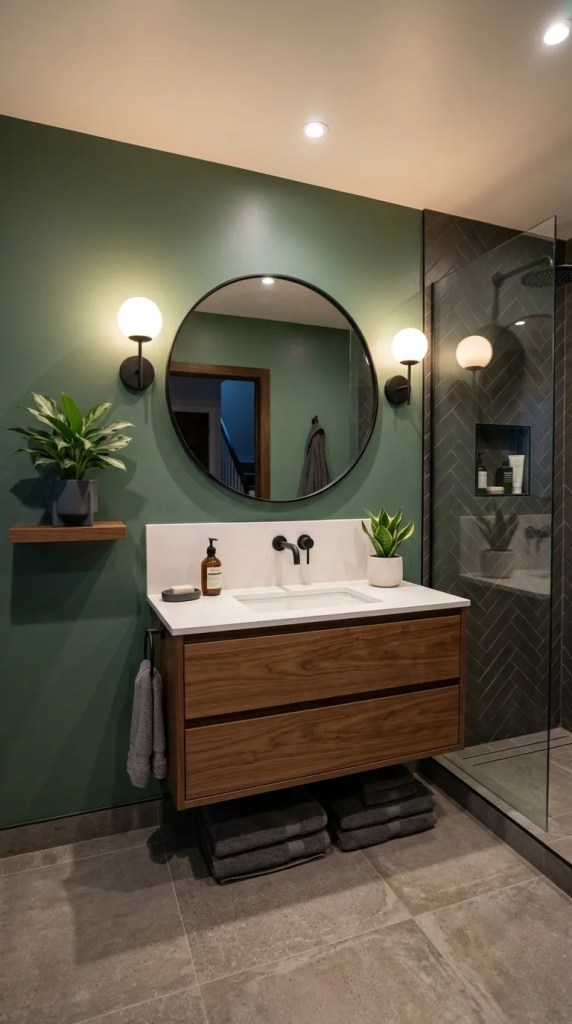
13. Bring in Greenery Carefully
Plants can soften hard bathroom surfaces and add a natural texture. A windowless bathroom, however, may receive too little daylight for many common houseplants.
Choose lower-light plant varieties only where the room provides enough indirect light to support them. In a bathroom with virtually no daylight, artificial greenery or botanical artwork can provide a similar visual effect.
Keep the greenery compact so it adds texture without taking useful floor or counter space.
Best for: Bathrooms that feel sterile or overly hard in their finishes.

14. Prioritize Strong Mechanical Ventilation
A bathroom without a window needs a reliable way to remove moisture. Mechanical exhaust ventilation becomes especially important because there is no window for natural airflow.
Use the exhaust fan during showers and for an appropriate period afterward according to the system and the bathroom’s needs. Keep the vent path maintained, and address persistent condensation rather than relying on decorative changes to hide it.
Good ventilation also helps protect paint, cabinetry, grout, wallpaper, and other moisture-sensitive finishes.
Best for: Any bathroom without a window, especially one that develops heavy condensation.

15. Use Warm, Balanced Finishes to Prevent a Clinical Feel
A brightly lit bathroom can still feel cold when every surface is pale, hard, and highly reflective.
Add warmth through a wood-look vanity, warmer neutral tile, natural textures, soft towels, or warm metal hardware. Lighting color also affects the atmosphere, so choose bulbs that provide clear visibility without making the room feel harsh.
These details work best after the main lighting and ventilation decisions are settled, giving the room a finished and comfortable character.
Best for: Bathrooms that have enough light but still feel cold or sterile.
How to Choose the Right Ideas for Your Bathroom
You do not need every idea in this list. Start with the problem that affects the room most.
If the bathroom is very dark
Prioritize layered lighting, a large mirror, an illuminated vanity mirror, light-colored finishes, and reflective surfaces.
If the bathroom is small
Start with a large mirror, floating vanity, mirrored storage, clear shower glass, and a clear countertop.
If you want actual natural daylight
Investigate a skylight or sun tunnel first. An upstairs location may make a roof-based daylighting solution practical when the structure allows it.
If you want a dramatic look
Consider darker finishes with layered lighting, mirrors, and selective reflective materials.
If moisture is your biggest concern
Address mechanical ventilation and moisture control before spending heavily on decorative changes.
What Should You Do First in a Windowless Upstairs Bathroom?
The order of the improvements matters. Start with the functional systems, then move into lighting, layout, and decoration.
- Solve ventilation. Make sure the bathroom can remove moisture effectively.
- Plan the lighting. Decide where general and vanity lighting will go.
- Choose the mirror. A large or illuminated mirror can influence both lighting and visual scale.
- Choose the main finishes. Decide whether you prefer a light, reflective scheme or a darker, more atmospheric one.
- Improve layout and storage. A floating vanity, concealed storage, and clear shower enclosure can reduce visual weight.
- Add personality. Bring in plants, pattern, artwork, textiles, and other decorative details after the functional foundation is in place.
Frequently Asked Questions
What is the best way to brighten a bathroom with no windows?
Start with layered lighting rather than relying on one ceiling fixture. A large mirror, illuminated vanity mirror, light-colored finishes, and selected reflective surfaces can then help distribute the available light throughout the room.
What colors are best for a windowless upstairs bathroom?
Light neutrals such as warm white, cream, pale beige, and light greige can help the room feel brighter. Dark colors can also work when paired with strong, layered lighting if you prefer a moodier design.
How can I make a small bathroom without windows look bigger?
Use a large mirror, keep the countertop clear, choose a floating vanity, and consider clear glass around the shower. These choices reduce visual barriers and preserve open sightlines.
Is a skylight a good idea for an upstairs bathroom without windows?
It can be, particularly when the bathroom sits beneath a suitable roof area. A sun tunnel may be another option when a conventional skylight is impractical. The feasibility depends on the roof structure, installation requirements, waterproofing, and local regulations.
Can a bathroom have no window?
Yes. A windowless bathroom needs appropriate mechanical ventilation and adequate artificial lighting. The lack of a window makes those systems more important.
How do you ventilate an upstairs bathroom without a window?
Use an appropriately designed exhaust ventilation system that vents moisture out of the building. Maintain the system and use it during and after showers to help manage humidity.
Should a windowless bathroom be light or dark?
Either approach can work. Choose lighter finishes when visual brightness is the priority. Choose darker finishes when you prefer atmosphere and can provide enough layered lighting to keep the room comfortable.
What type of mirror works best in a bathroom with no windows?
A large mirror can increase the sense of space and reflect existing light, while an illuminated or backlit mirror adds another lighting layer around the vanity. Combining those functions can be useful in a small bathroom.
Final Thoughts
The best upstairs bathroom ideas for a bathroom with no windows start with the room’s practical limits. Lighting, ventilation, reflection, layout, and storage should guide the main decisions.
A small windowless bathroom can feel more open with layered lighting, a large mirror, light finishes, and clear glass. A darker palette can work when the goal is a more atmospheric room and the lighting plan is strong.
Choose the improvements that solve the biggest problem in your bathroom first, then add the decorative details that support the look you want.

