
A studio apartment holds your bedroom, living room, and sometimes your kitchen inside one open room. That kind of open floor plan can start feeling smaller by the week, especially once a new coat of paint or a piece of furniture isn’t in the budget.
Here’s the part most guides skip: what makes a studio feel cramped rarely comes down to square footage. Sightlines, furniture angles, and natural light do most of the work in how spacious a room reads. Every idea below uses only what you already own, arranged in a way that changes how the room feels without changing what’s in it.

Store What You Don’t Use Weekly Under the Bed or Inside Furniture You Own
A studio has no spare closet or basement to hide things in. Anything you own either stays in view or gets tucked away, and every item sitting out adds to the visual noise in the room.
Move off-season clothes, spare bedding, or rarely used kitchen items into the space under your bed or into a dresser drawer you barely open. Most bed frames leave enough clearance underneath for flat bins or vacuum-sealed bags. Decluttering this way frees up surfaces without asking you to get rid of anything.

Push Your Bed Diagonally Into a Corner
In most studios, the bed carries the most visual weight in the room. Pushed flat against a wall, it reinforces the boxy shape of the space.
Angle it instead, corner to corner at roughly 45 degrees. This breaks up the room’s straight lines and opens a triangular pocket of floor space beside it, one you can actually walk through. It works best in a corner near a window, since the angle lets daylight wrap around the bed instead of stopping flat at its edge.

Turn a Bookshelf or Dresser Into a Room Divider
Zoning a studio without walls comes down to using furniture you already own as a soft boundary. Turn a bookshelf or dresser sideways, perpendicular to the wall instead of flat against it, and place it between your sleep area and your living area.
Aim for a piece in the 30 to 40 inch range if you have a choice. Tall enough to signal a divide, short enough that you can still see over it to the far wall. That sightline above the divider is what keeps the room reading as open instead of chopped in half.
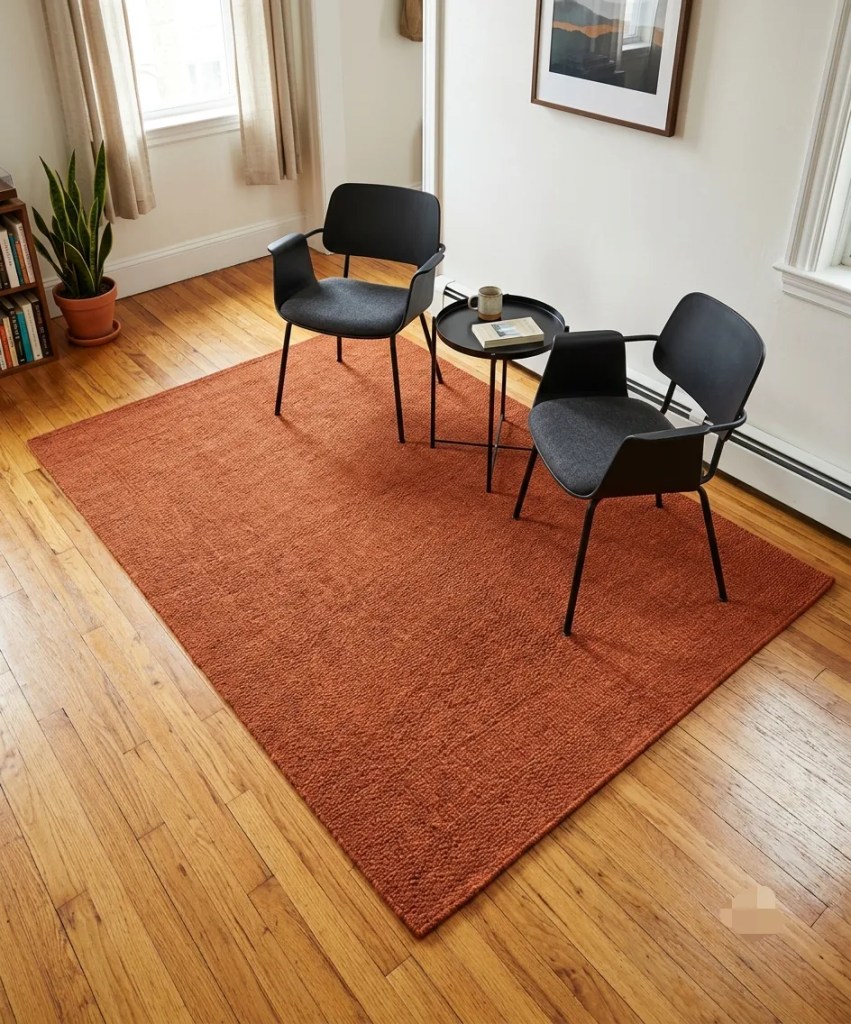
Mark Zones With a Single Rug Boundary, Not Walls
If you already own a rug, stop centering it under the whole room. Move it under one zone only, your seating area or your desk, so it defines a section instead of covering the floor evenly.
Float the rug a few inches in from the walls rather than pushing its edges flush against them. A floating rug reads as an intentional zone. One pushed into a corner reads like leftover floor covering.

Take the Closet Doors Off and Store Them
Closet doors take up floor clearance whether they’re open or shut, and a closed door reads as a flat wall your eye stops at. Removing them opens up that sightline and lets your eye travel into the closet instead of bouncing off a panel.
Store the doors flat under the bed or behind a piece of furniture you never move. This works best when the closet interior is reasonably organized, since an open closet becomes another small room your eye can read as extra space.

Clear a Straight Walking Path From Door to Window
One unbroken line running from your entry door to the far window does more for the room’s perceived size than any single piece of decor. Trace that path mentally and check what’s sitting inside it.
Chairs, baskets, stacked boxes, anything blocking that line breaks the effect. A clear path reads as a hallway, and a hallway always reads as distance rather than a small room.

Angle a Chair or Table Into the Corner
Furniture set flush against every wall reinforces a boxed-in feeling, since every line in the room runs parallel or perpendicular. One angled piece breaks that pattern.
Set a reading chair or a side table at 45 degrees in a corner instead of flat against the wall. You don’t need to move it far from where it already sits. The eye reads an angled object as receding into the room rather than sitting flush against its edge.

Turn Your Desk to Face the Window, Not the Wall
A desk facing a blank wall creates a dead-end sightline two or three feet long. Turn that same desk toward the window and the sightline extends past the glass, into the courtyard, the street, the sky.
This costs nothing and takes a few minutes to test. Working with a view in front of you, even an ordinary one, reads as far more open than staring at drywall at close range.

Face a Mirror Straight at Your Main Window
Position an existing mirror directly opposite your main window rather than at an angle to it. A straight-on placement reflects the window itself, along with the light coming through it.
An angled mirror only catches a partial reflection of the room. A mirror facing the window head-on can make the space read as having two light sources instead of one, which matters most in a studio where a single window usually does all the work.

Deep Clean Every Mirror and Window Pane
A layer of dust or grime on a mirror or window cuts down how much light it reflects back into the room, even when the surface looks fine at a glance. This step gets skipped constantly because it doesn’t feel like decorating.
Wipe every mirror and pane with a lint-free cloth and a basic glass cleaner. The difference shows up fastest in the afternoon, when direct sun hits the glass and either scatters cleanly across the room or gets absorbed into a dull, streaked surface.

Swap Heavy Drapes for Sheers You Already Own
Heavy drapes block a portion of your window even when pulled fully open, since the folded fabric still sits along the frame’s edges. If you own a lighter sheer panel from a past apartment or a seasonal swap, hang that instead during the day.
Sheers let daylight scatter through the fabric rather than stopping at it. Save the heavy drapes for nighttime privacy and swap back once the sun goes down.

Remount Your Curtain Rod Higher and Wider
If you already own a curtain rod, its mounting height matters more than the curtains themselves. Move the bracket to 4 to 6 inches above the window frame, and extend it 3 to 4 inches past the frame on each side.
This stretches the visible glass upward and outward without touching the actual window size. A rod mounted flush against the frame does the opposite. It shortens the window and draws the eye to where the wall stops rather than where the glass starts.

Trade Your One Ceiling Light for Corner Lamps You Own
A single overhead fixture lights the center of a studio and leaves the corners in shadow, which makes the usable room feel smaller than it is. Most people already own at least one lamp sitting unused somewhere.
Move it into a dim corner and turn off the overhead light in the evening. Light coming from two different points in the room reads as more square footage than one bright source in the middle of the ceiling.

Pull Up an Oversized Rug or Size It Down
A rug that runs edge to edge under all your furniture removes any visible floor, and a floor with a visible break in it reads as bigger than one covered corner to corner.
If your rug is oversized for the space, fold one edge under a piece of furniture so a strip of bare floor shows along at least one wall. That exposed border does more for the room’s perceived size than the rug covering the whole footprint.

Group Small Decor Into One Tall Vignette
Scattered items across a shelf or windowsill, a candle here, a frame there, a few books stacked loosely, all register as separate points the eye has to process one at a time.
Pull them into a single cluster instead. Place the tallest piece toward the back and step the rest down in height toward the front. Choose light colors from what you already own for this grouping specifically, since a pale cluster blends into the wall behind it rather than standing out as another block of visual weight.

Leave One Wall Completely Empty
It feels counterintuitive to leave a bare stretch of wall in a room with limited space, but one section with nothing on it gives the eye a place to land and rest before scanning the rest of the room.
Pick the wall with the least furniture in front of it and clear anything hanging there. That negative space reads as intentional breathing room for the eye.

Hide Cords, Ironing Boards, and Extra Chairs
An ironing board propped in a corner, a folding chair leaned against a wall, or a tangle of cords running across the floor all sit inside your eyeline even when they’re small. In a one-room layout, there’s nowhere for these items to disappear on their own.
Fold the ironing board flat and slide it behind a dresser or under the bed. Loop cords and tuck them along a baseboard out of the walking path. None of this takes more than a few minutes, and clearing it removes several small distractions at once.
Frequently Asked Questions
What is the fastest free way to make a studio apartment look bigger?
Clearing a straight walking path from your door to your farthest window gives the quickest visual payoff. It takes minutes and immediately changes how the room reads, since an unbroken sightline signals distance more than any single piece of decor.
Do mirrors actually make a small apartment look bigger?
Yes, when it’s positioned correctly. Facing a mirror straight into your main window reflects both the glass and the daylight coming through it, working almost like a second light source in the room. Angling the mirror instead only picks up a partial reflection and does far less for the space.
Should I get rid of my area rug in a studio apartment?
Not necessarily. An oversized rug covering the entire floor hides any bare floor you’d otherwise see, which shrinks the room visually. Sizing it down, or folding one edge under a piece of furniture so a strip of floor shows along a wall, tends to work better than removing it entirely.
How do you create separate zones in a studio apartment without walls?
Furniture placement does most of the work. A bookshelf or dresser turned sideways between your sleep and living areas signals a boundary while still letting you see over it. A single rug floated under one section, rather than covering the whole floor, adds a second layer of definition.
Is less furniture really better in a studio apartment?
Fewer pieces help, but placement matters as much as quantity. A room with three well-angled pieces can read as more open than a room with two pieces pushed flat against every wall.
Where is the best place to put a mirror in a small apartment?
Directly opposite your main window, facing it head-on rather than at an angle. This reflects the most daylight back into the room and works especially well in a studio, where one window usually provides most of the natural light.
How high should curtains be hung to make a room look taller?
Mount the rod 4 to 6 inches above the window frame and extend it 3 to 4 inches past the frame on each side. This stretches the visible window upward and outward without changing the actual glass size.
Does decluttering really make that much difference in a small space?
It does, particularly in a studio where every item sits inside your line of sight at all times. Storing off-season items or rarely used pieces under the bed or inside a dresser drawer clears visual weight from the room while letting you keep everything you own.


