
When an entryway has no closet, backpacks can quickly become the first thing you see when you walk through the door. A dedicated backpack storage spot keeps the bags off the floor while making them easy to grab on the way out.
The best setup depends on the space available. A narrow wall can hold a vertical backpack station, an unused door can become a storage surface, and a low row of hooks can make it easier for children to put their bags away themselves. The key is to give backpacks a defined place that fits the way the entryway is used.
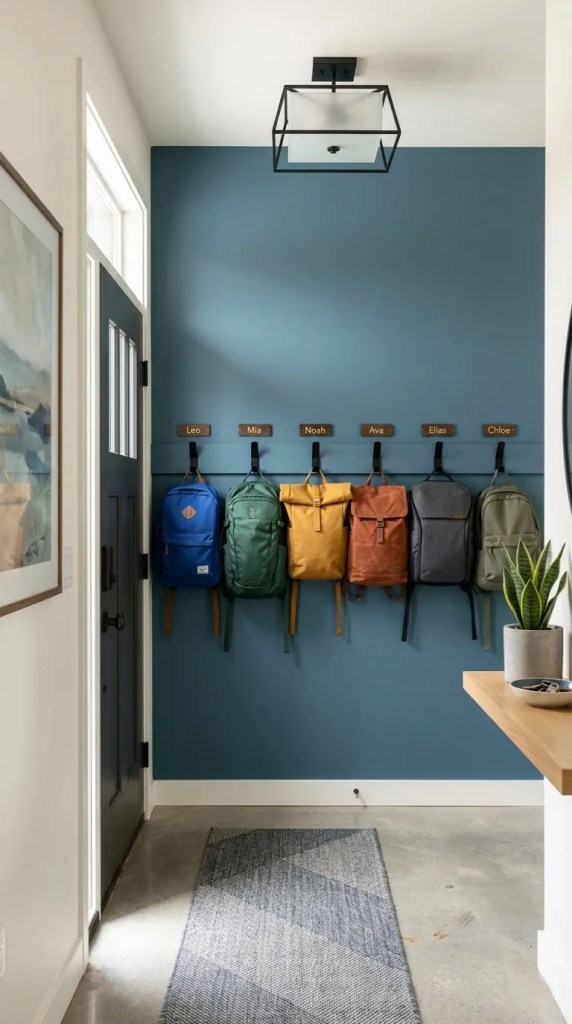
Create a Dedicated Wall of Individual Backpack Hooks
Turn one section of the entryway wall into a backpack-only drop zone. Instead of placing several bags on one crowded hook, give each backpack its own hook with enough space for the bag to hang without covering the others.
A horizontal row works well on a wider wall. If the entryway is narrow, arrange the hooks in a vertical column to use more wall height and less wall width.
Keep the hooks at a practical height for the people using them. For a family, you can place children’s hooks lower and adult storage higher. This creates a clear place for every backpack without taking up floor space.
Choose hooks that can handle the weight of a filled backpack and anchor them securely to the wall. A small label or name tag above each hook can also help assign one spot to each person.

Build a Slim Vertical Backpack Station on a Narrow Wall
A narrow strip of wall can become a dedicated backpack station when floor space is limited. Mount a slim vertical rail or a narrow backboard with several hooks running down its length.
This arrangement works particularly well beside an entry door, at the end of a hallway, or on a wall section that is too narrow for a cabinet. The backpacks hang close to the wall instead of spreading across the entryway.
Keep the lowest hook high enough that the backpack does not drag on the floor. For children’s bags, position the lower hooks where they can reach them without stretching.
You can also give each hook a defined section of the vertical station. That makes the storage feel intentional and prevents several backpacks from being piled onto one another.
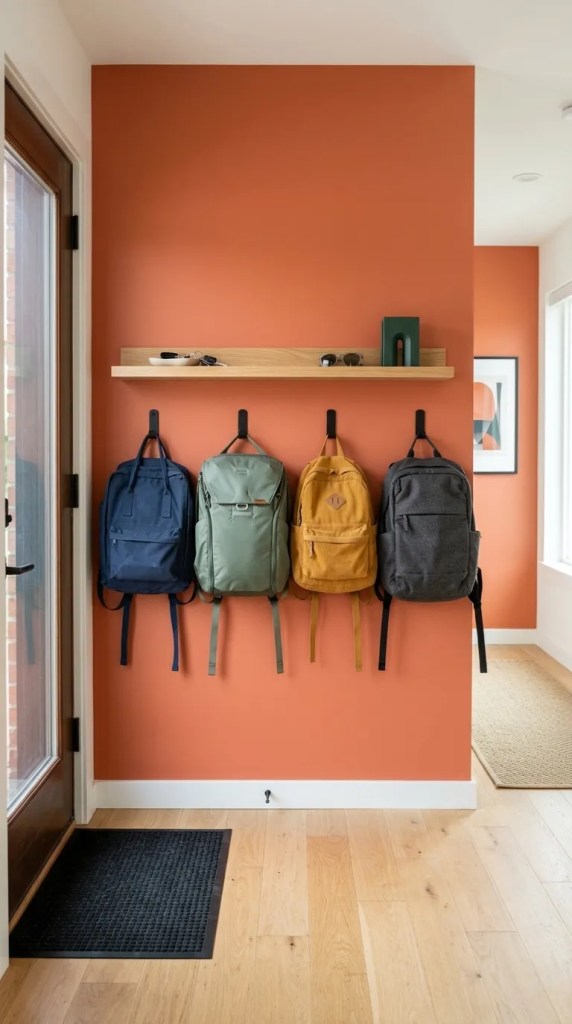
Install a Backpack Shelf With Hooks Directly Below It
A shelf with hooks underneath creates a compact backpack station with two useful levels. The hooks hold the backpacks while the shelf provides a place for smaller items that need to stay near the door.
Keep the shelf shallow enough that it does not make a narrow walkway feel cramped. The backpacks should hang freely beneath it rather than bunching against a bench, cabinet, or nearby wall.
For several backpacks, use one hook per bag and leave enough room between them for the bags to hang separately. A longer shelf can serve multiple household members, while a short version works for one or two backpacks.
The shelf can also help define the backpack zone visually. Keep the area underneath dedicated to the bags so it does not turn into another general-purpose storage pile.

Set Up a Low Backpack Drop Zone for Children
A backpack storage area works better when children can reach it without help. Install a row of sturdy hooks at a child-friendly height and give each child a specific place for their school bag.
A low wall section near the entrance is useful for this setup. The bags can be removed in the morning and returned to the same hooks after school without needing to be lifted onto an adult-height rack.
Keep the storage arrangement visually clear. One hook per backpack makes it obvious where each bag belongs, while a name label, initial, or small marker can help distinguish the spaces.
If the entryway also stores coats, keep the backpack hooks separate from the coat area. This prevents straps and backpack bodies from becoming tangled with outerwear and gives the bags their own drop zone.

Turn the Back of the Entry Door Into a Backpack Station
When the entryway walls are already occupied, use the back of the door for backpack storage. Over-the-door hooks or a door-mounted rack can create a storage zone without adding furniture to the entrance.
This works best when the backpacks remain within the door’s usable clearance. Check that the bags do not hit a nearby wall, cabinet, mirror, or piece of furniture when the door swings open.
Use separate hanging points if more than one backpack needs to be stored. Keeping the bags distributed across the door makes the storage easier to use and reduces the chance of several heavy bags collecting on one hook.
For a rental where permanent wall-mounted storage is restricted, the door can provide a useful place to create a dedicated backpack drop zone while keeping the main entryway open.
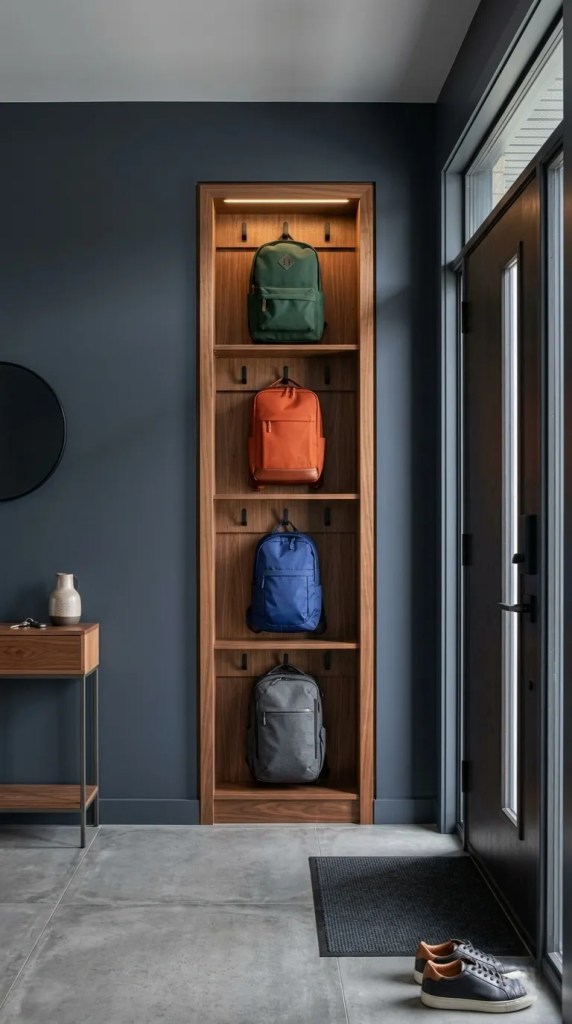
Make a Shallow Backpack Nook That Looks Built In
A shallow backpack nook can give bags a defined home without requiring a full entryway closet. The idea is to create a contained vertical section where the backpacks hang inside a framed or visually separated area.
Use a shallow wall-mounted structure with hooks, narrow cubbies, or individual hanging points. The storage does not need to extend far into the entryway because the backpacks themselves provide most of the required depth.
This approach is useful when you want backpacks to look organized rather than hanging randomly along the wall. The surrounding frame or backboard visually groups the bags into one intentional storage zone.
For several household members, divide the nook into individual sections. Each section can have its own hook or small compartment so that backpacks remain separated instead of forming one bulky cluster.
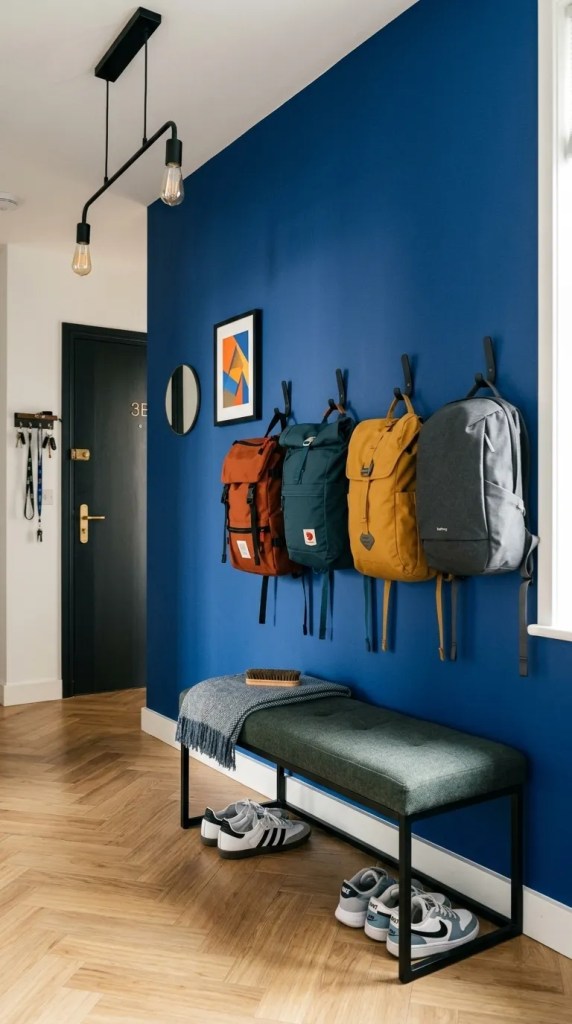
Combine a Slim Bench With Dedicated Backpack Hooks Above
If the entryway needs a place to sit, use a slim bench as the lower part of a dedicated backpack station. The important part is the storage above the bench: install hooks specifically for the backpacks rather than expecting the bags to share the bench with shoes and other belongings.
Hang each backpack directly above or slightly beside the seating area. This keeps the bags elevated and makes them easy to reach when someone is leaving or returning home.
A narrow bench is preferable in a tight entryway because the backpack storage should not create a deep obstruction. Keep the bench and hooks aligned so the entire arrangement functions as one compact drop zone.
Avoid using the space beneath the bench as the primary backpack storage. Backpacks placed on the floor underneath can become difficult to retrieve and can interfere with the entryway’s walking space.

Turn an Unused Entryway Corner Into Backpack Parking
An awkward corner can become useful backpack storage when there is not enough uninterrupted wall space for a conventional rack. Install hooks or a narrow vertical storage structure so the backpacks occupy the corner rather than the middle of the entryway.
This arrangement is useful when doors, windows, or other fixtures break up the available wall area. A corner can provide enough vertical room for several backpacks without requiring a large piece of furniture.
Keep the hooks positioned so the bags hang inward toward the corner instead of projecting deeply into the walkway. This helps contain the bulk of the backpacks within an otherwise underused area.
For a household with multiple bags, use staggered or vertically arranged hooks rather than placing every backpack at the same point. The goal is to keep the bags separated while making the corner function as one dedicated backpack station.

Hide Backpacks Inside a Shallow Entryway Cabinet
If you prefer not to see backpacks hanging in the entryway, use a shallow cabinet specifically sized around the bags. The cabinet creates a concealed backpack zone without requiring a traditional closet.
Before choosing the cabinet, check the actual size of the backpacks when they are filled. A compartment that is too shallow can force the bags to bend or prevent the doors from closing properly.
Give each frequently used backpack enough room to be removed without pulling several other bags out first. Individual compartments or separate hooks inside the cabinet can make the storage easier to manage.
Place the cabinet close to the entrance so it remains a practical drop zone. If backpacks have to be carried across the house before they can be stored, they are more likely to end up somewhere else.

Create a Modular Backpack Wall for the Whole Household
For several people sharing one entryway, create a modular wall where every backpack has its own designated section. Start with the bags currently in use and arrange the storage so additional hooks or compartments can be added later.
A modular system can use a horizontal rail, separate hook panels, or several small storage sections arranged vertically. The important feature is that each backpack has a defined place rather than competing for the same hook.
Keep the sections visually consistent so the storage reads as one backpack station. You can distinguish each person’s area with labels, initials, or different small markers without making the wall look overly busy.
This setup is useful when the household’s needs change. Children’s backpacks may eventually be replaced by larger school bags, or another person may need an additional storage position. A modular arrangement can be adjusted without redesigning the entire entryway.
Frequently Asked Questions
Where should backpacks be stored in a house without an entryway closet?
The best location is usually close to the entrance on a wall, door, corner, or shallow storage unit that can hold the bags without blocking the walkway. Giving each backpack a dedicated position makes it easier to keep the entryway clear.
What is the best way to store backpacks in a small entryway?
Use vertical storage whenever possible. A narrow wall-mounted hook station, vertical backpack rack, or over-the-door setup can hold several bags while using little floor space.
How do you keep backpacks off the entryway floor?
Give every backpack a specific hanging point that is easy to reach. Individual hooks are particularly useful because the bag has an obvious place to return to instead of being dropped beneath a bench or beside the door.
How high should backpack hooks be for children?
Place children’s backpack hooks low enough that they can comfortably reach them without assistance. The exact height depends on the child’s size, so the most useful test is whether the child can independently hang and remove the backpack.
Can you store backpacks on the back of an entryway door?
Yes. An over-the-door rack or suitable door-mounted hooks can turn the back of the door into a dedicated backpack station. Make sure the bags do not interfere with the door’s movement or collide with nearby walls and furniture.
How do you store several backpacks in a narrow entryway?
Use a vertical arrangement with individual hooks or compartments. Stacking the storage upward rather than extending it outward keeps the backpacks contained while preserving the walking path.
How can you hide backpacks in an entryway without a closet?
Use a shallow cabinet or enclosed storage unit with enough depth for the backpacks. Assigning each bag its own internal space prevents the cabinet from becoming a difficult-to-access pile.
Conclusion
You do not need an entryway closet to give backpacks a proper home. The most effective solution is to create a dedicated backpack drop zone that works with the space you already have.
A narrow wall can become a vertical backpack station, an unused corner can hold several bags, and the back of a door can provide storage when wall space is unavailable. For families, individual hooks or modular sections can keep everyone’s backpack separate, while a shallow cabinet can keep the bags hidden.
The right choice depends on the entryway’s main limitation. If floor space is scarce, go vertical. If wall space is limited, consider the door or a corner. If children use the bags, prioritize reachable hooks. If visual clutter is the main concern, choose concealed storage.
The goal is to give backpacks a specific, accessible place that fits naturally into the closet-free entryway.


